War Overview · First Opium War (1839–42)
After the Industrial Revolution, the leading naval power sent an expeditionary force up the Chinese coast from south to north for two years; the Celestial Empire, said to have an 800,000-strong standing army, did not win a single battle. Modern Chinese history begins here.
Engagement Data
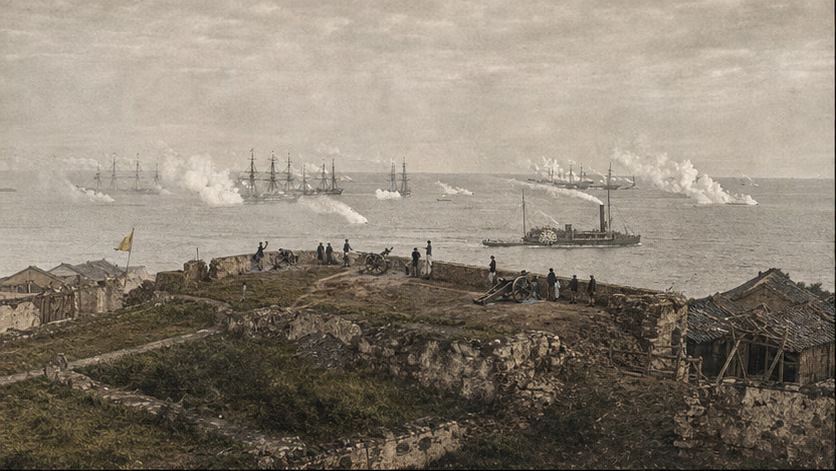
| Item | Details |
|---|---|
| Time | 1839.9 – 1842.8 (armed conflict began with the Battle of Kowloon; British parliamentary funding came in 1840.4; the expeditionary force reached China in 1840.6) |
| Place | Pearl River estuary → Fujian-Zhejiang coast → lower Yangtze |
| Belligerents | Great Qing (Daoguang reign) / Britain (early Victorian era) |
| Result | 1842.8.29 Treaty of Nanjing: cession of Hong Kong Island, opening of five treaty ports, indemnity of 21 million silver dollars, fixed tariff by agreement |
Belligerents (War Level)
| Item | Qing forces | British forces |
|---|---|---|
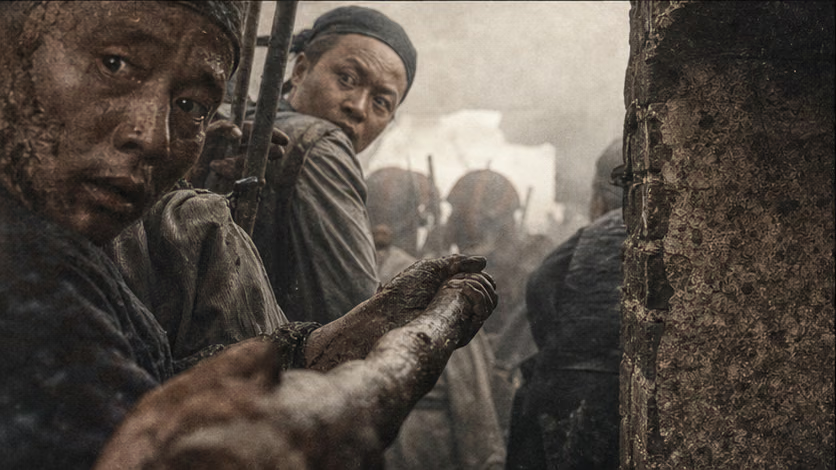
| Total strength | About 200,000 Eight Banner troops + about 600,000 Green Standard troops; but they were dispersed in garrison posts like policing forces, and no more than several thousand to just over 10,000 could be assembled for a single battle | In the early phase, about 4,000 army troops and more than 40 vessels; by 1842, more than 10,000 army troops and over 100 vessels |
| Infantry firearms | Matchlock muskets and heavy wall guns, mixed with bows, spears, swords, and rattan shields | Brown Bess flintlock smoothbore muskets, with some percussion guns (able to fire in rain) |
| Artillery | Mud-mold cast guns with many air holes; gun carriages could not elevate, depress, or traverse; accuracy depended on "fixed-value firing" | Shipborne 32-pounder guns, field artillery, Congreve rockets |
| Mobility | Interprovincial troop transfers routinely took months; reinforcements from Sichuan and Shaanxi for the Eastern Zhejiang counteroffensive waited as long as half a year | Steam towing for sailing vessels, able to reach any point along the coast within days; the iron-hulled paddle steamer Nemesis had shallow draft and could enter inland rivers directly |
| System | Front-line memorials were embellished layer by layer, and the emperor made decisions from "victory reports" | Plenipotentiaries made decisions on the ground, with Parliament ratifying afterward |
Historical Setting
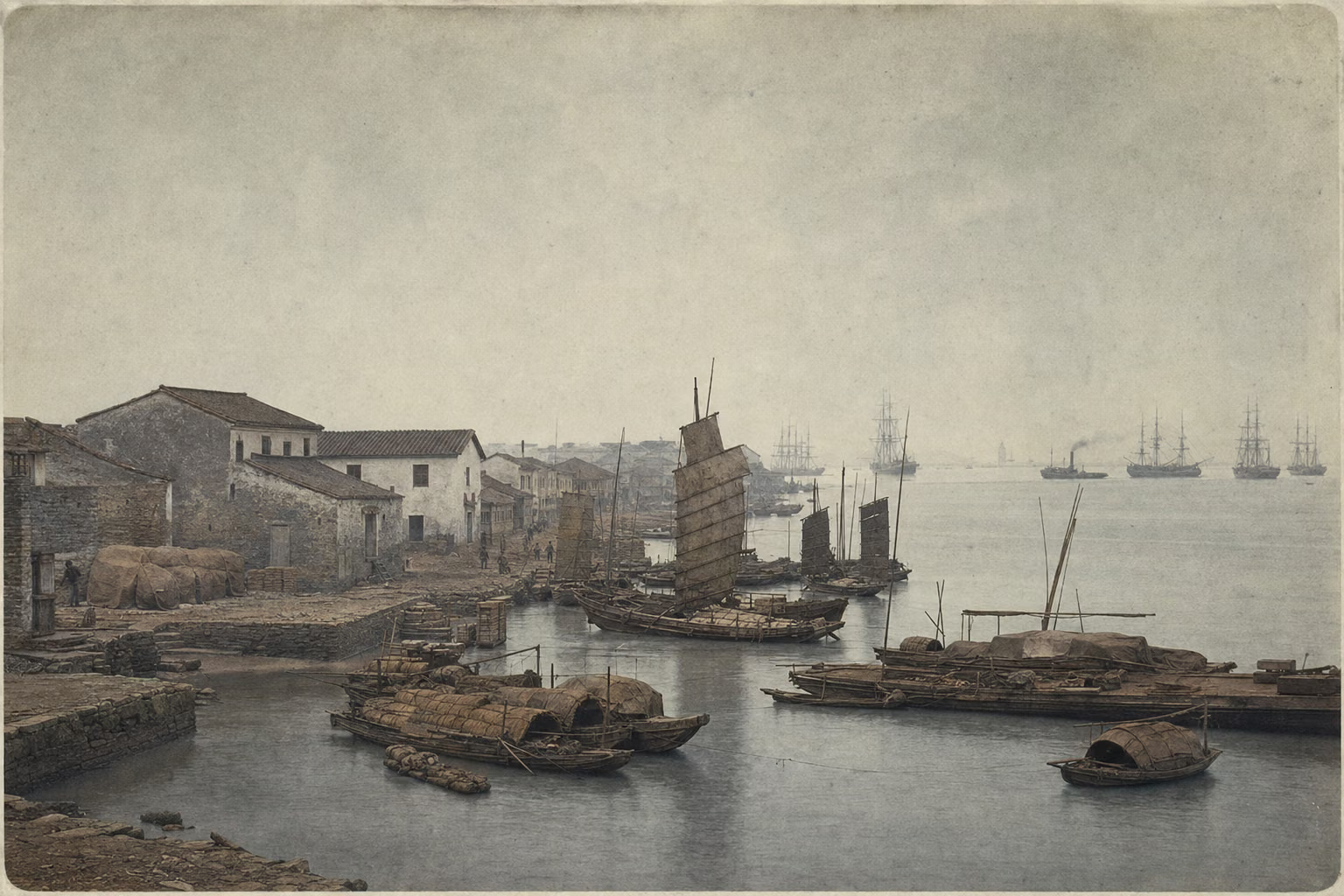
World: The Industrial Revolution had entered the age of steam. Britain needed markets and raw materials, and the doctrine of free trade overrode almost everything. In 1834, the East India Company's monopoly on trade with China was abolished, and private merchants and opium capital poured into the gaps of the Canton system.
China: Under the Daoguang reign, silver was flowing outward, silver became dear and copper cash cheap, and the anti-opium campaign was triggered by a fiscal crisis. The military system had been at peace for nearly 200 years; the Green Standard was scattered through patrol posts like police, with no field army corps. Firearms remained at the level of the late Ming and early Qing, and knowledge of the outside world was close to zero. After the war began, Daoguang was still asking whether "there is an overland route from England to the Muslim borderlands" (source unverified).
Britain: The trade deficit with China was balanced through Indian opium, and opium taxes accounted for about one tenth of the Indian government's revenue (proportion unverified). The destruction of opium at Humen triggered lobbying by the merchant community. In the parliamentary debate of 1840.4, an opposition motion of condemnation was defeated 271:262 - a margin of nine votes - and Gladstone left behind the protest, "a war more unjust in its origin I never knew" (translation unverified). In Britain itself, the opposition at the time already called the war the "Opium War."
Why It Was Fought
The decision chain behind this war was not long at either end, but every link in it fastened onto a misjudgment.
Beijing's first link was the opium ban. The court had debated opium for years, with proposals for legalization and strict prohibition both placed before the throne. Daoguang chose strict prohibition - not as a choice for war, but as a choice against silver outflow and soldiers' opium use. Lin Zexu went to Guangdong as imperial commissioner; confiscation, bonds of compliance, and expulsions tightened step by step. The intelligence in his hands reflected common claims that "the barbarians' waists and legs are stiff, and they cannot fight after landing" and that "without tea and rhubarb, the barbarians cannot survive away from here." On that basis he judged that the British would neither dare nor be able to come from afar to make war (scholarly estimates differ on how much Lin Zexu's translated reports grasped conditions in Britain; unverified). What was missing was precisely the key point: he did not know London would turn confiscated opium into a bill between states.
London's first link was indeed triggered by that bill. When Charles Elliot accepted the opium in the Queen's name, the private merchants' losses became a government debt. Palmerston used the moment to set the war machine in motion; the substance of the instructions was to take an island, open ports, and make a treaty (full texts of the successive instructions on China unverified). The expeditionary force fought a limited war: it did not occupy the interior or the capital; it blockaded sea entrances, took islands as hostages, struck in sequence, and forced the Celestial Empire to return to the table on its own. Its misjudgment of this opponent was just as large: it thought a single letter delivered at the Baihe could produce negotiations.
The second link was Dinghai and the Baihe. The British occupied Zhoushan and delivered a letter off the mouth of the Tianjin approaches. Daoguang's judgment was that the border trouble had arisen from Lin Zexu's mishandling: punish Lin, pacify the barbarians, and the matter would be over. Qishan went south and negotiated for three months without agreement. Shajiao and Dajiao fell in a single day, the court's line shifted from pacification to suppression, and it declared war, dispatched generals, and transferred troops, each decision firmer than the last, while its intelligence still came from front-line memorials embellished layer by layer. After the defeat at Canton, Yishan reported the six million ransom for the city as "merchant arrears" and a defeat as a victory; on that basis the emperor ordered coastal troop reductions. This was the most expensive edict of the whole war: it directly cleared the coastal defenses for Pottinger's northward advance (arrival of the troop-reduction edict in each province and its implementation unverified).
The third link was in London. Elliot's demands were too low, so he was replaced. Pottinger came east under more aggressive instructions and fought from Xiamen all the way to Ningbo. Beijing's response was Yijing's Eastern Zhejiang counteroffensive. After that counteroffensive ended in disaster, Liu Yunke, governor of Zhejiang, submitted a memorial known as the "Ten Matters for Concern," laying out that there was no battle left to fight and that pacification was the best course (full text of the memorial and exact date of submission unverified). This was the first time within the system that "the war cannot go on" was written into an official document. After this, Qiying and Ilibu came onto the stage, and the dispute between suppression and pacification quietly tilted through the exchange of court dispatches.
The limits on both sides were not troop numbers. On the Qing side, the standing army was spread through garrison posts like patrol police, interprovincial troop transfers were counted in months, war expenses were apportioned to the provinces, and there was not a single coin of new money. On the British side, the expeditionary force numbered only several thousand to a little over 10,000, deaths from disease were many times battle deaths, and supply depended entirely on a sea line of ten thousand li. Britain could not afford to win a protracted war; the Qing court could not fight a modern war. Whichever side miscalculated the other's limits first would be the first to sit down at the table. In August 1842, with the British cutting off the grain transport route and arriving before Nanjing, it was the Qing court that sat down first.
Course of the Engagement (Four Phases)
| Phase | Time | Key points | Article |
|---|---|---|---|
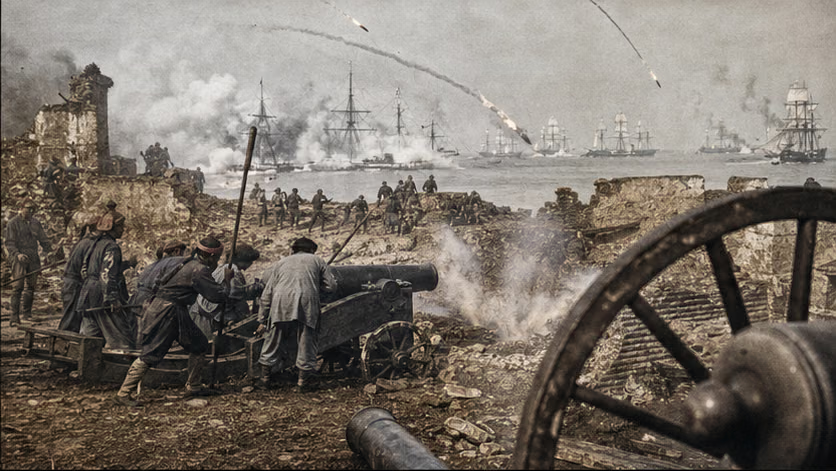
| Guangdong standoff | 1839.9–1840.5 | Small-scale fighting at Kowloon, Chuanbi, Guanyong, and elsewhere; both sides' battle reports had already begun telling different stories | Battles of Kowloon and Chuanbi |
| First northward advance | 1840.6–1841.1 | Blockade of the Pearl River estuary, occupation of Dinghai as hostage, delivery of a letter at the Baihe; Daoguang dismissed Lin Zexu, and Qishan went south for "loose restraint" | First Battle of Dinghai |
| Pearl River showdown | 1841.1–5 | Dajiao and Shajiao fell → "Convention of Chuanbi" → both courts rejected it → repeated defeats at Humen and Canton, 6 million paid to ransom the city | Battle of Humen, Battle of Canton (1841), Sanyuanli Resistance Against the British |
| Pottinger's northward advance | 1841.8–1842.8 | Xiamen, second occupation of Dinghai, Zhenhai, Ningbo; disastrous failure of the Eastern Zhejiang counteroffensive; Zhapu, Wusong, Zhenjiang, troops before Nanjing | Battle of Xiamen, Second Battle of Dinghai, Battle of Zhenhai, Counteroffensive in Eastern Zhejiang, Battle of Zhapu, Battle of Wusong, Battle of Zhenjiang |
Under Nanjing and the Treaty (1842.8)
In early August, the British fleet anchored off Xiaguan and threatened to attack the city. Qiying and Ilibu negotiated with Pottinger, and on 8.29 the Treaty of Nanjing was signed aboard HMS Cornwallis: Hong Kong Island was ceded; the five ports of Canton, Fuzhou, Xiamen, Ningbo, and Shanghai were opened; compensation for the opium, merchant arrears, and military expenses totaled 21 million silver dollars (equivalent to more than 14 million taels of silver, conversion unverified), payable over four years; the Cohong monopoly was abolished; and tariffs were to be "fairly agreed." In 1843, the General Regulations for Trade at the Five Ports and the Treaty of the Bogue added consular jurisdiction and unilateral most-favored-nation treatment; in 1844, the American Treaty of Wanghia and the French Treaty of Whampoa followed. The treaty was not a single document, but the beginning of a system.
Casualties and Losses
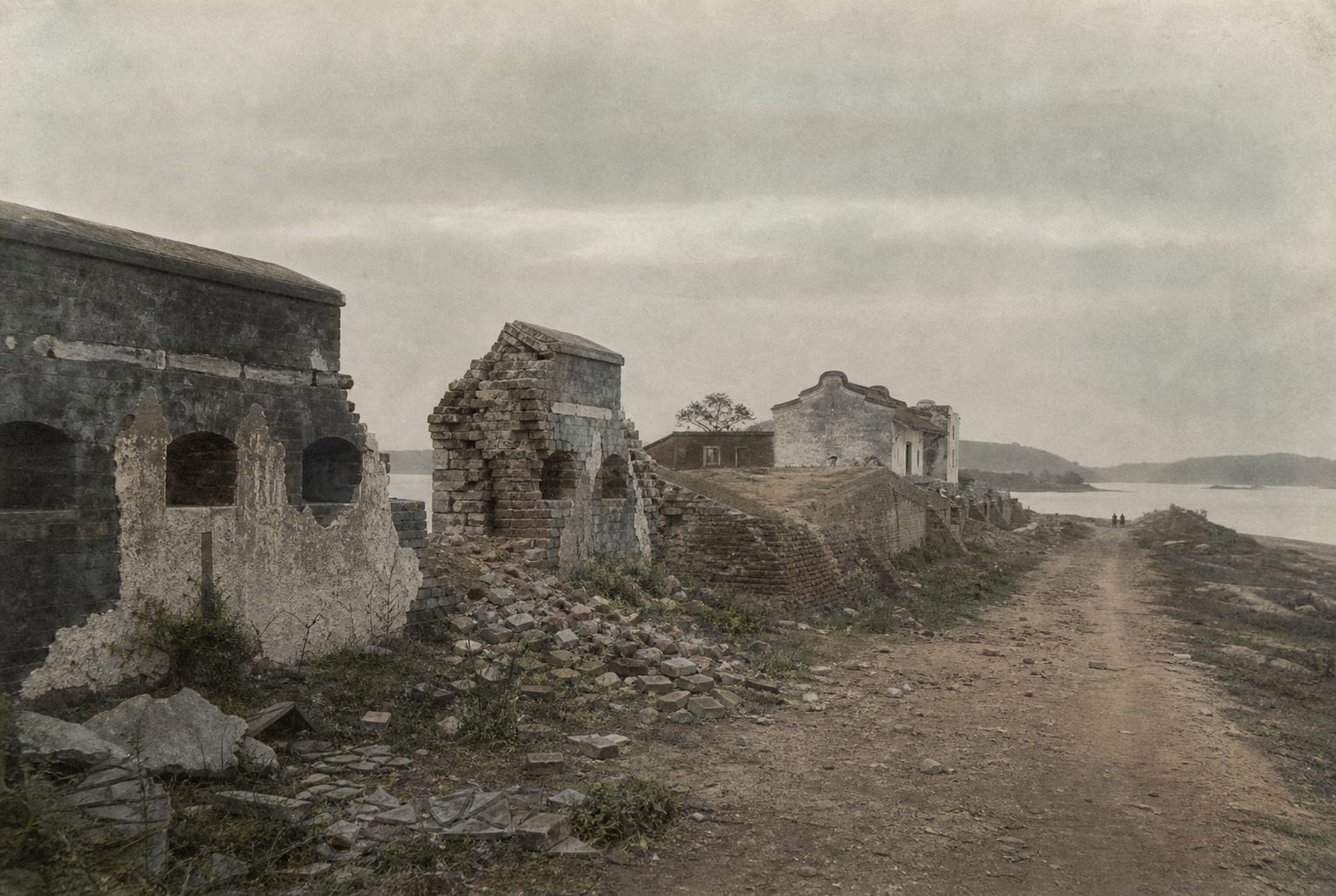
- Qing forces: across the campaigns, combat deaths from provincial commanders and brigade generals down to common soldiers totaled several thousand (campaign archives use different statistical bases, total unverified); the naval forces and coastal fortress system as a whole collapsed.
- British forces: cumulative battle deaths were probably under 100 (accounts differ), while deaths from disease were several times battle deaths - in the first occupation of Dinghai alone, 448 died of illness within half a year.
- Civilians: looting in coastal cities, routed soldiers harming the population, epidemic disease and displacement; no statistics.
- Finance: Qing war expenses ran to tens of millions of taels (bases vary widely, accounts differ) + indemnities; postwar apportionment entered local society, laying groundwork for popular unrest.
Aftermath
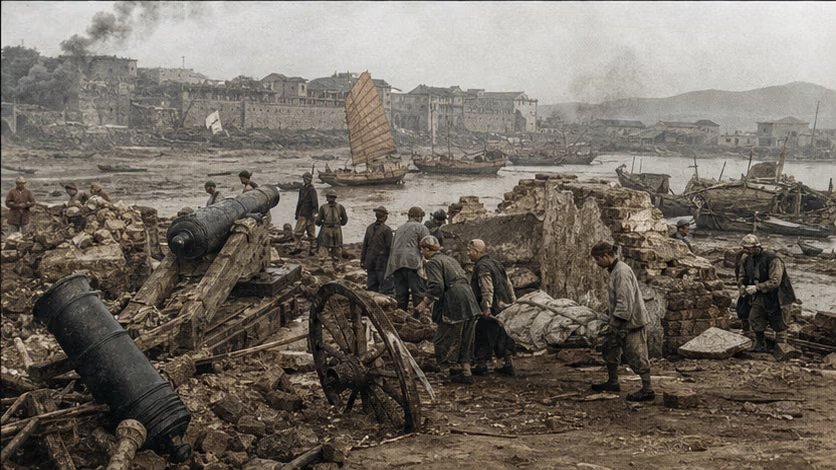
- Beginning of the treaty system: trade at the five ports, cession of Hong Kong, extraterritoriality - the institutional frame of the next 100 years took shape here.
- Yet court and country did not "wake in pain": after the war there was no military reform, Wei Yuan's Illustrated Treatise on the Maritime Kingdoms went almost unnoticed in China, while reprinted editions spread widely in Bakumatsu Japan (edition history unverified). The same book became a contrast between two countries' fates.
- The center of trade moved north from Canton to Shanghai, unemployment spread in the Pearl River Delta, and social disorder deepened - one distant cause of the Taiping Heavenly Kingdom. This causal chain is the first clasp by which Whence We Came strings wars into a road.
How Each Side Records It
- Chinese side: the starting point of modern history and of the national-humiliation narrative, the prototype scene for "backwardness invites beating"; the first lesson in the textbook system.
- British side: long called the "War with China" or the "Trade War," marginal in textbooks - a war the other side remembered for 180 years while one's own side turned away and forgot. The name itself is a position.
Disputes and Sensitivities
- Lin Zexu: the established judgment of national hero coexists with historiographical revision (Mao Haijian: Lin, too, had no plan with a chance of victory and remained inside the old suppression/pacification framework). Both layers of evaluation coexist.
- Qishan: textbook narrative of "traitor" vs. historiographical revision as "realism under conditions with no chance of victory."
- Charles Elliot and Pottinger: policy differences between the two plenipotentiaries; Elliot himself loathed the opium trade yet carried out the war, an inner contradiction.
- Counterfactuals of the "what if there had been no Opium War" type cannot be falsified.
Contents
The approach to Nanjing is included under Battle of Zhenjiang.
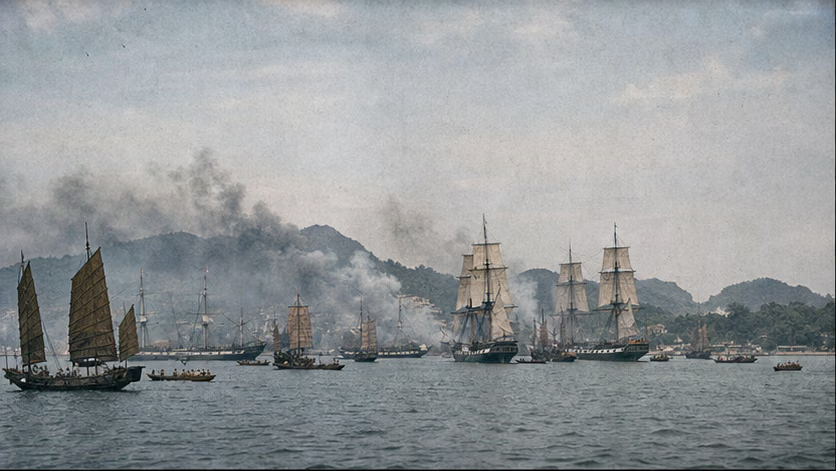 Battles of Kowloon and Chuanbi (incl. Battle of Guanyong)1839.09Three strings of small-scale clashes in the nine months before the war broke out: no more than several dozen casualties, yet the divergence between battle reports and reality, and the dispute over "from which day the war should be counted," both begin here.
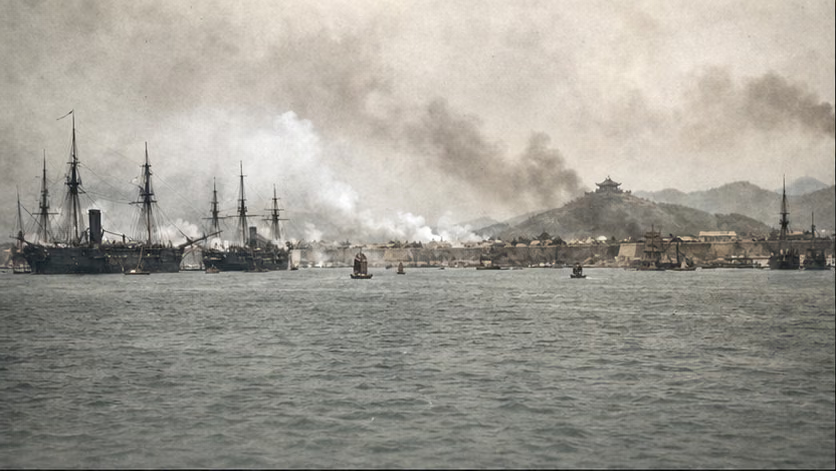 First Battle of Dinghai1840.0713 Qing soldiers were killed, and the county seat fell within 1 day; in the following 6 months, 448 men of the occupying force died of disease. A battle decided by artillery in 9 minutes was given, over half a year, an ironic footnote rewritten by epidemic disease.
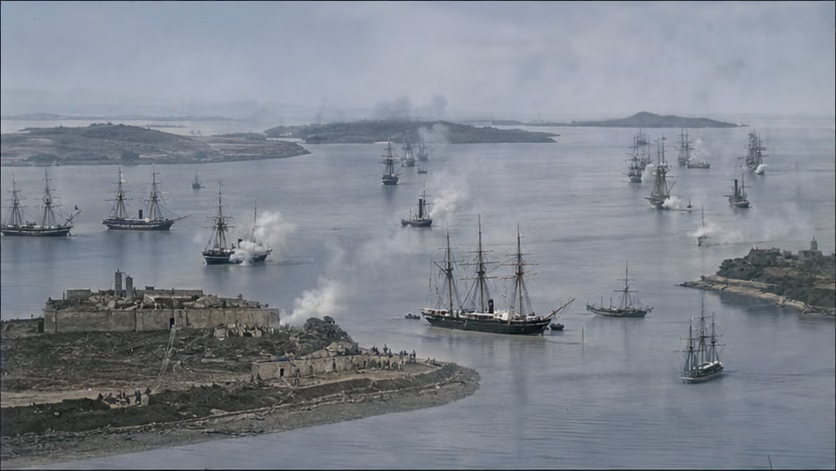 Battle of Humen (incl. Battles of Dajiao and Shajiao)1841.01The three-layered gateway at the throat of the Pearl River was dismantled as a system in two general assaults, and the provincial naval commander of Guangdong died at his own gun position: the coastal defense that Lin Zexu and Guan Tianpei had labored over for two years proved a harsh conclusion -- the system concept was right, and every component was wrong.
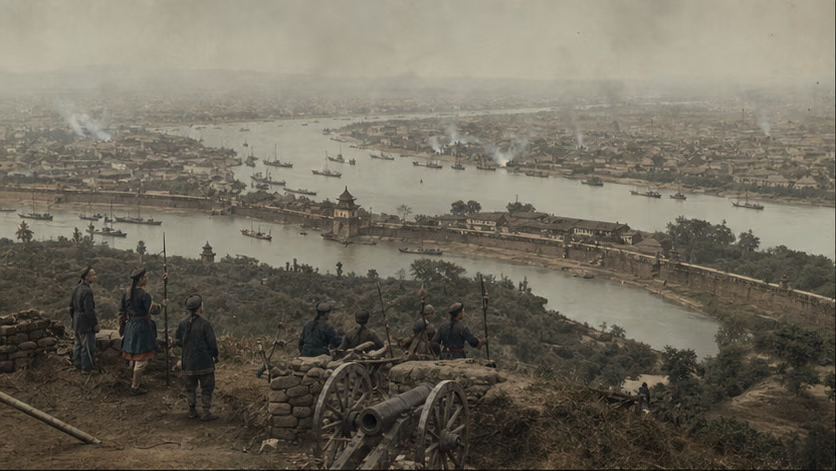 Battle of Canton (1841, incl. Battle of Wuyong)1841.02A night attack staged for the emperor's eyes bought six days in which enemy guns looked down over the whole city, and a ransom of six million silver dollars -- after which the commander wrote the defeat into a great victory, the emperor believed him, and coastal defenses were cut back on that basis.
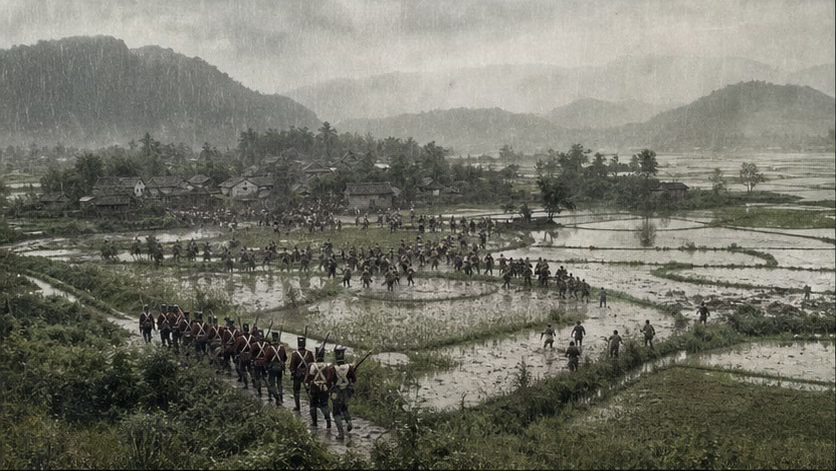 Sanyuanli Resistance Against the British1841.05Three days after official troops ransomed Canton, villagers from more than one hundred villages used hoes, rakes, and long spears to surround a small British detachment in rain-soaked paddy fields -- the casualty figures differ by dozens of times, and the scale of commemoration differs by a thousandfold, but the records on both sides are sincere.
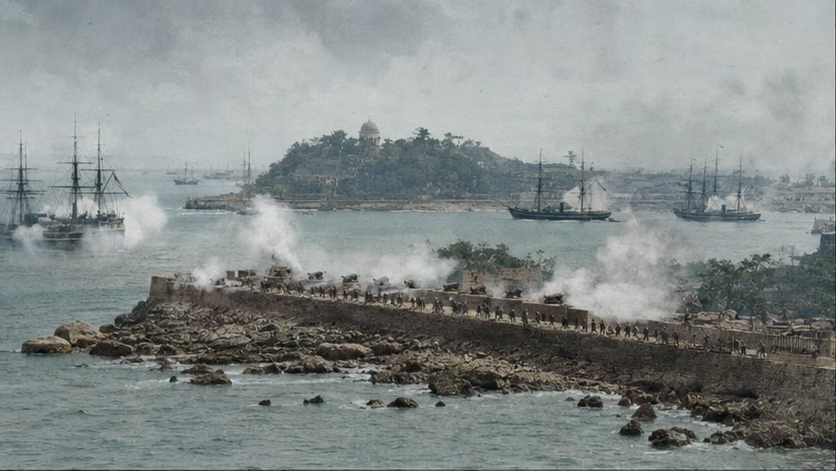 Battle of Xiamen1841.08The granite "stone wall" that had cost more than one million taels of silver really did hold against naval gunfire from the front -- and then British troops landed from the flank and rear, and within hours everything reverted to type. Pottinger's first action on the northward route repeated the pattern of "invincible from the front, collapsing from the flank and rear" once again.
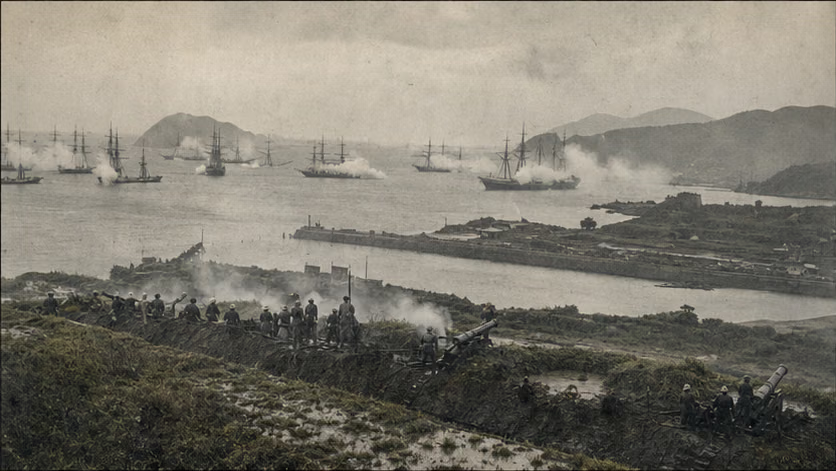 Second Battle of Dinghai1841.09The same city, fought over again 14 months later: last time, 13 men were killed and the city fell in 1 day; this time, 3 commanders-in-chief fought to the death for 6 days and fell on the same day. Through 2 falls, Dinghai measured the distance between a "prepared extremity" and an "unprepared collapse" -- with the same ending.
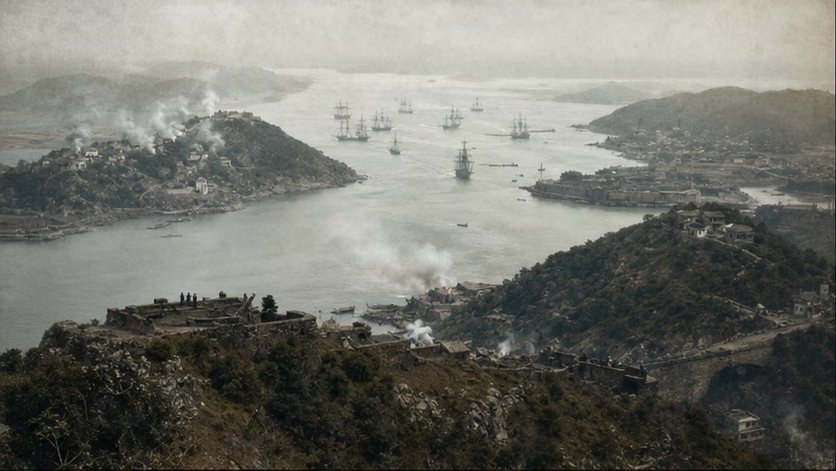 Battle of Zhenhai (1841)1841.10The imperial commissioner drowned himself for the state, while the provincial military commander fled without fighting -- in the same city, on the same day, the war set the two extremes of official integrity side by side; two years later, the one who fled became the only senior commander executed in the entire war, while the imperial kinsmen who falsely reported the military situation remained unharmed.
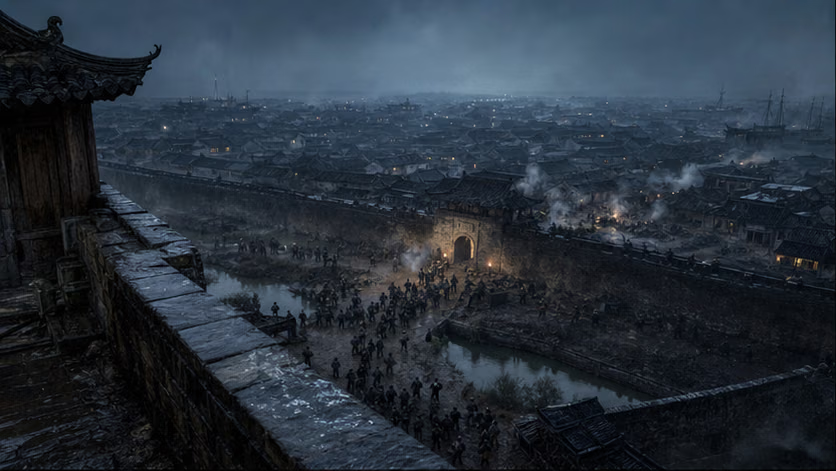 Counteroffensive in Eastern Zhejiang1842.03The Qing army's only strategic counteroffensive of the entire war: the date of departure was chosen by divination as the "auspicious time of the four Yin," and the plan for storming the cities leaked out in banquet-table conversation -- Tibetan native troops brought from Greater Jinchuan charged into Ningbo's West Gate and died beneath the guns already sighted on Cross Street.
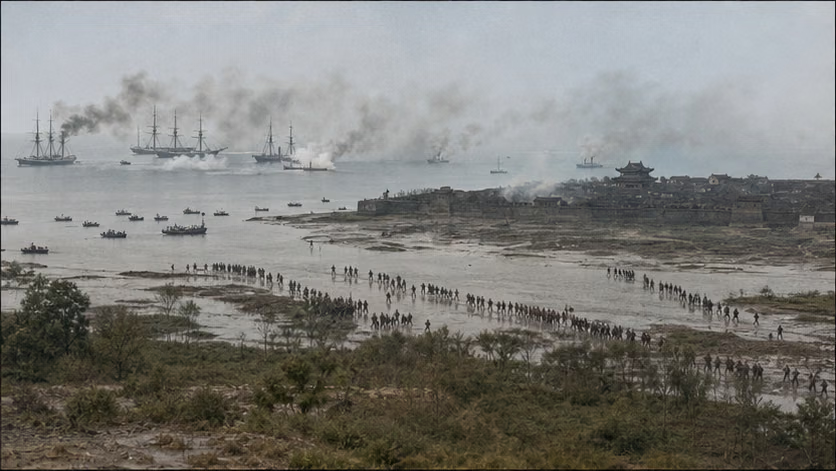 Battle of Zhapu1842.05For the first time on Chinese soil, a Banner garrison city was taken by storm. Nearly 300 Banner soldiers fought to the end from inside a temple; on the day the city fell, garrison families killed themselves in groups -- a hereditary military estate proved, in a brutal way, that it still had people, but no longer had a way.
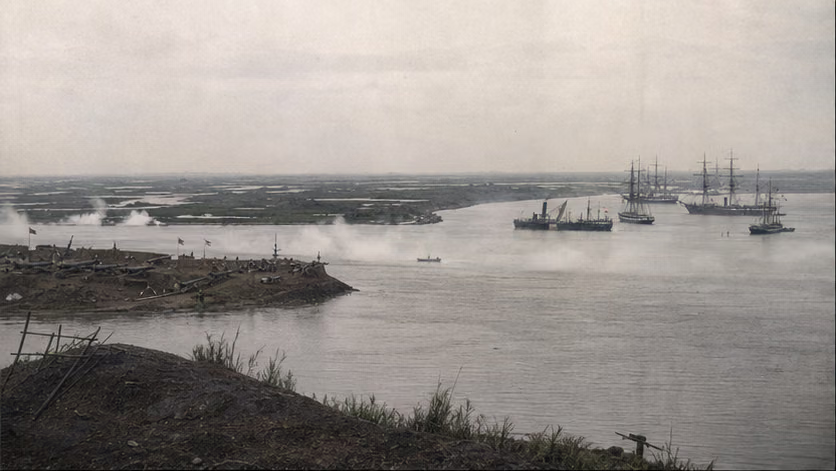 Battle of Wusong1842.06The sixty-seven-year-old Provincial Military Commander of Jiangnan stood at the West Battery and fought through two and a half hours of ship-to-shore artillery exchange -- the most substantial naval-shore gun battle of the entire war; then the governor-general's honor guard collapsed first behind him. The gate of Shanghai was opened from within.
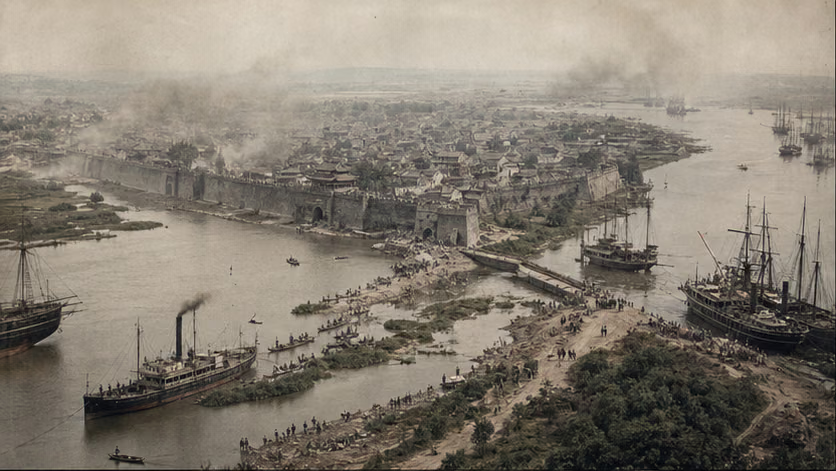 Battle of Zhenjiang1842.07The battle in which the British assembled their largest force and suffered their heaviest losses of the entire war: 1,600 Banner soldiers and 400 Qingzhou troops fought a full day of street fighting at the crossroads of the Grand Canal and the Yangtze. The defending commander died with the city, and before the battle he had also massacred civilians inside it.
Sources and Open Questions
Main sources: Mao Haijian, The Collapse of the Celestial Empire: A Reexamination of the Opium War (the first reference for the whole war); Chouban Yiwu Shimo, Daoguang Reign; Liang Tingnan, Yifen Wenji; Wei Yuan, Daoguang Yangsou Zhengfu Ji; Bingham, Narrative of the Expedition to China; Bernard, Narrative of the Voyages and Services of the Nemesis; Ouchterlony, The Chinese War; Lin Zexu's translated reports in the Macao News. Because the period predates the main body of modern newspapers, the documentary platforms are mainly official books and Western soldiers' accounts.
Open questions: details of the parliamentary vote and Gladstone's original wording; total Qing casualties and war expenses; total British combat deaths; conversion of the indemnity into taels of silver; Japanese reprint editions of Illustrated Treatise on the Maritime Kingdoms; source for Daoguang's question about an "overland route"; proportion of Indian revenue supplied by the opium tax; how much Lin Zexu's translated reports grasped British conditions; full texts of the successive instructions on China; arrival of the troop-reduction edict in each province and its implementation; full text of Liu Yunke's "Ten Matters for Concern" memorial and exact date of submission.
All images on this site are AI-generated depictions. They are not historical photographs, not primary sources, and do not depict any real individual.