War Overview · Chinese Civil War (1945–50)
No sooner had the War of Resistance ended than a civil war opened with 4.3 million men against 1.27 million; three years later the offensive and defensive positions had reversed, and four years later two regimes stood on opposite sides of a strait. The last great war with muzzles turned inward decided the China that followed: its military history has ended, but the line it drew remains there to this day.
Engagement Data
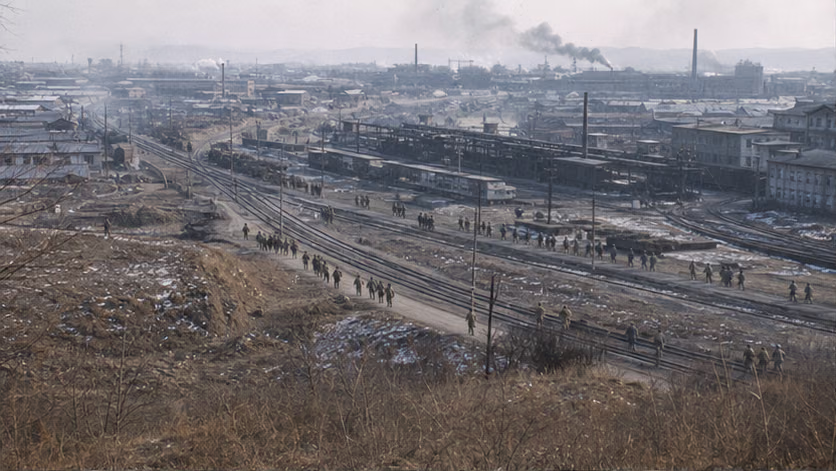
| Item | Content |
|---|---|
| Time | 1945.9 (Shangdang) – 1950 (closing with Hainan Island Campaign and Battle of Chamdo; Kinmen Guningtou in 1949.10 marked the other end of the military dividing line) |
| Place | Northeast -> North China, East China, and the Central Plains -> the whole country |
| Belligerents | Chinese Communist Party (Eighth Route Army and New Fourth Army -> field armies -> People's Liberation Army) / National Government of the Republic of China (Nationalist Army) |
| Third parties | United States (mediation and aid to Chiang), Soviet Union (the Northeast chessboard and tacit assistance to the Communists) -- the accounts of both sides each have their own basis, and both readings stand |
| Result | 1949.10.1 founding of the People's Republic of China; 1949.12 the National Government moved to Taiwan -- the two sides of the Taiwan Strait have remained divided to this day |
Belligerents (War Level)
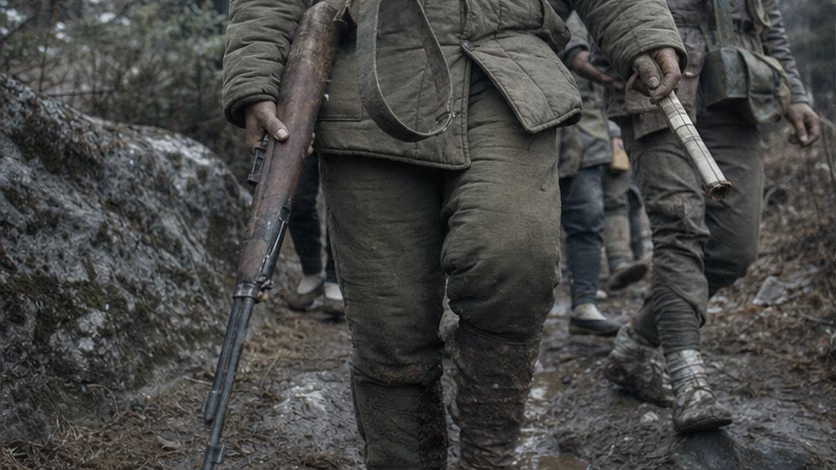
| Item | Nationalist Army | People's Liberation Army |
|---|---|---|
| Opening, 1946 | About 4.3 million, with U.S.-equipped and semi-U.S.-equipped units as the backbone, and exclusive possession of naval and air forces | About 1.27 million, mixed equipment, no navy or air force |
| Reversal, autumn 1948 | About 3.65 million, with morale collapsing | About 2.8 million, with land-reform mobilization making manpower inexhaustible |
| Endgame, 1949 | More than half rose in organized units, surrendered, or were reorganized (the bases vary widely by account) | More than 4 million |
| Supply | Rail lines and urban points -- once cut apart, paralysis followed | Rural-area support plus captures (the concrete referent behind the jibe "captain of the transport corps") |
Historical Setting
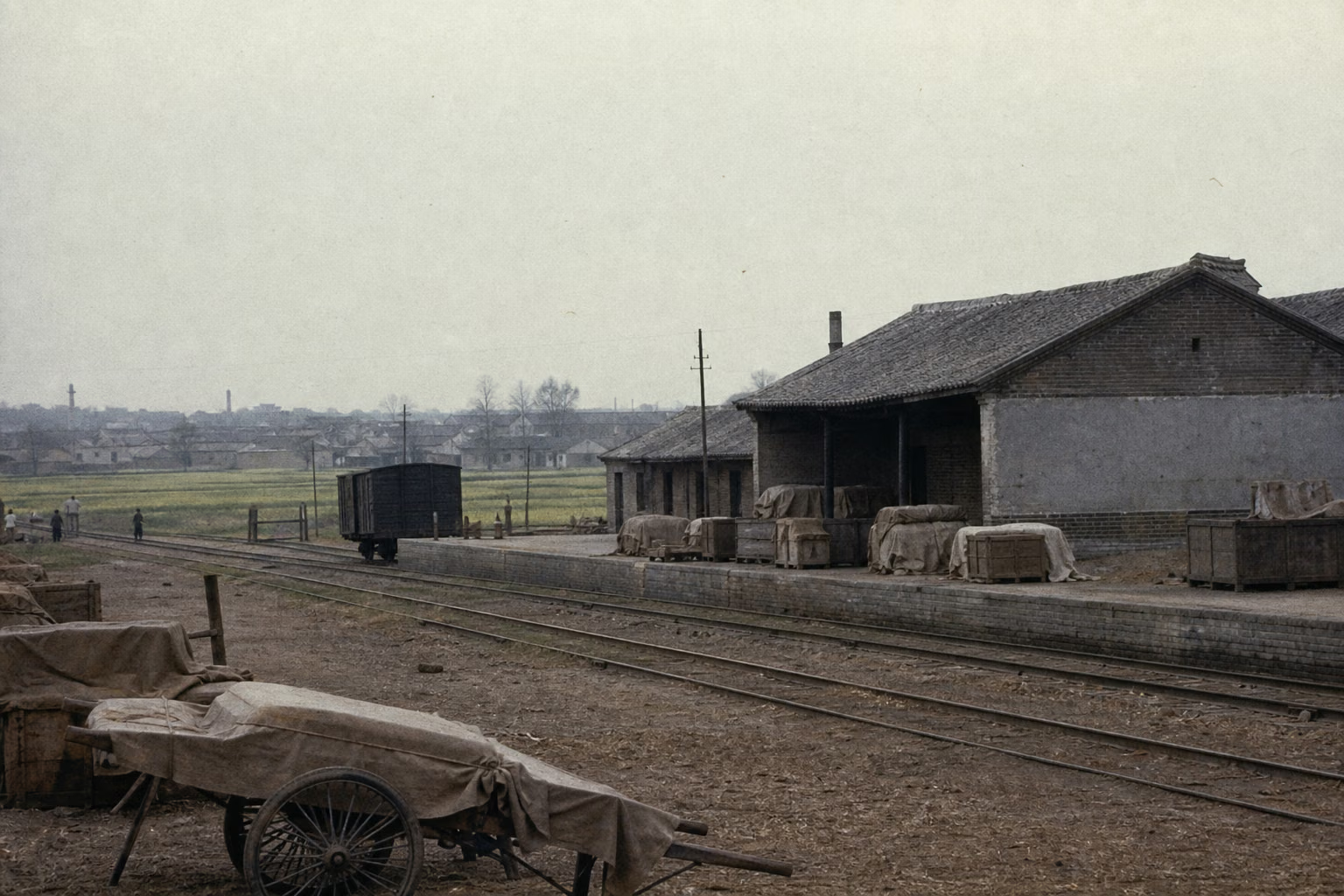
World: the Cold War was taking shape -- the United States and the Soviet Union moved from alliance into confrontation, and the Chinese civil war was embedded within that shift while still preserving its own logic (neither superpower succeeded in controlling its respective "proxy"; this point matters). The failure of Marshall's mediation (1945.12–1947.1) was a crossing point between Cold War history and Chinese history.
China: after eight years of the War of Resistance had drained the people's strength, the desire for peace was real (the Double Tenth Agreement and the Political Consultative Conference resolutions were once a genuine window of hope -- the possibility of peace did exist, and it did close). The Nationalist-controlled areas were undergoing economic collapse: hyperinflation (the collapse curve from fabi to the gold yuan), corruption in taking over recovered areas ("five gains in office"), student and labor movements ("against hunger and civil war") -- the cities collapsed before the battlefield did. In the liberated areas, land reform (the 1946 "May Fourth Directive" -> the 1947 *Outline Land Law*) created a mobilizing machine of "turned-over" peasants joining the army and supporting the front, along with excessive violence in land reform ※ (the statistical bases and the history of correction are unverified).
Why It Was Fought
On the night victory in the War of Resistance was won, firecrackers filled Chongqing. The hope for peace was real: at the end of August 1945 Mao Zedong flew to Chongqing and negotiated the Double Tenth Agreement; in January 1946 the ceasefire order took effect and the Political Consultative Conference convened, with nationalization of the armies and a coalition government both written down on paper. Outside the paper, two armies that had fought a civil war for ten years had no reason to lay down their weapons. Nanjing wanted unified government and military orders; for Yan'an, surrendering the army meant surrendering life itself -- the memory of the 1927 party purge was present throughout the Party, so the road of handing over the guns first and then discussing political democratization could not be taken; the road of forming a coalition government first and then reorganizing the armies was one Nanjing would not take. Behind the dispute over sequence was the fact that neither side trusted the other.
The Northeast was the first stone that crushed peace. Soviet troops occupied the Northeast; as their withdrawal opened one station after another, the KMT and CPC armies both rushed beyond the Pass. The KMT sought to take over sovereignty; the CPC set the line of "developing to the north and defending to the south," sending 100,000 troops and 20,000 cadres beyond the Pass ahead of time (figures vary by account). The ceasefire order of January 1946 explicitly excluded the Northeast -- the fighting stopped inside the Pass and continued beyond it, and that is how the battle at Siping Street came about.
Nanjing's determination was calculated from troop strength: 4.3 million against 1.27 million, U.S. equipment, naval and air forces, control of the country's cities and railways, U.S. aid internationally, and Soviet recognition of the National Government alone under treaty. The claim that the Communist forces would be resolved in "three to six months" circulated widely in the army (source unverified). That calculation missed two things: the economy of the Nationalist-controlled areas was melting inside inflation, and conscripts dragged in by force did not want to fight a civil war; behind the opponent, meanwhile, a mobilizing machine was spreading out -- in 1946 the "May Fourth Directive" changed rent and interest reduction into land to the tiller, and from then on peasants who joined the army were fighting for their own land.
Yan'an's determination had two layers. One was that there was no room to avoid the fight: the ceasefire order had become void, the Central Plains was encircled, and without a breakout the result would be an enlarged replay of the New Fourth Army Incident. The other was confidence worked out by calculation: the liberated areas had more than 100 million people and over 1 million square kilometers of surface area; once the cities and railways were yielded, the Nationalist Army's strength would thin out when spread across that surface. The struggle was not for one city or one piece of ground, but for the enemy's effective strength. "If people are preserved while land is lost, both people and land will be preserved" was the later summary of this calculus (the phrase dates to around the abandonment of Yan'an in 1947; source unverified). This determination was not fixed at the Chongqing negotiating table; it became clear step by step after the peace window closed in the summer of 1946 (decision telegrams and documents unverified).
The only other road left was the one in the Political Consultative Conference resolutions. In November 1946, the National Constituent Assembly was convened in Nanjing by the KMT alone; the CPC and the China Democratic League refused to attend, and the door to negotiation closed there. Marshall's mediation had already failed before this -- the mediator had himself placed a bet, mediating on one side while providing military aid to Nanjing on the other.
On June 26, 1946, the Nationalist Army attacked the Central Plains Liberated Area; Li Xiannian's forces broke out, and full-scale civil war began.
Course of the Engagement (Four Phases)
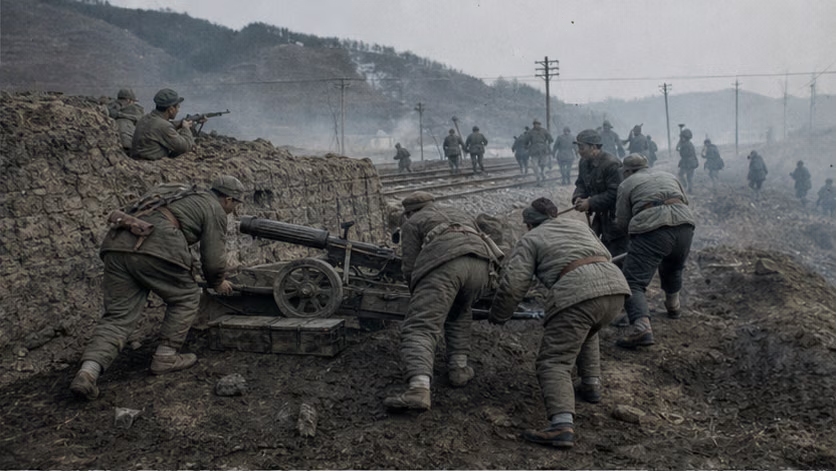
| Phase | Time | Main Points | Separate Articles |
|---|---|---|---|
| Struggle for the initiative | 1945.9–1946.6 | Contest over accepting the Japanese surrender; the rush into the Northeast (100,000 troops entering the Northeast); Chongqing negotiations and the tug-of-war over the ceasefire order; Shangdang, Handan, Siping | Battle of Shangdang, Battle of Handan, Defense of Siping |
| Strategic defense | 1946.6–1947.6 | All-out offensive (beginning with the Breakout from the Central Plains) -> focused offensive (northern Shaanxi and Shandong); interior-line annihilation battles became a pattern: Seven Battles, Seven Victories in Central Jiangsu; Battle of Laiwu; Battle of Menglianggu; three victories in northern Shaanxi | Articles from the Breakout from the Central Plains through Battle of Menglianggu |
| Strategic offensive | 1947.6–1948.8 | Liu and Deng's advance into the Dabie Mountains, with three armies cooperating and the two wings pinning the enemy; Battle of Yudong and Battle of Jinan (1948) opened the age of assaults on fortified positions | Articles from Southwest Shandong and the Advance into the Dabie Mountains through Battle of Jinan (1948) |
| Strategic decision and pursuit | 1948.9–1950 | The three great campaigns -- Liaoshen Campaign, Huaihai Campaign, and Pingjin Campaign -- destroyed 1.54 million Nationalist troops in 154 days (the bases vary widely by account); Yangtze Crossing Campaign, Battle of Shanghai (1949), Hengbao, the two Guang provinces, the Southwest; setback at Battle of Kinmen and success in Hainan Island Campaign | Overviews and separate articles on the three great campaigns, and articles from the Yangtze Crossing Campaign onward |
Casualties and Losses
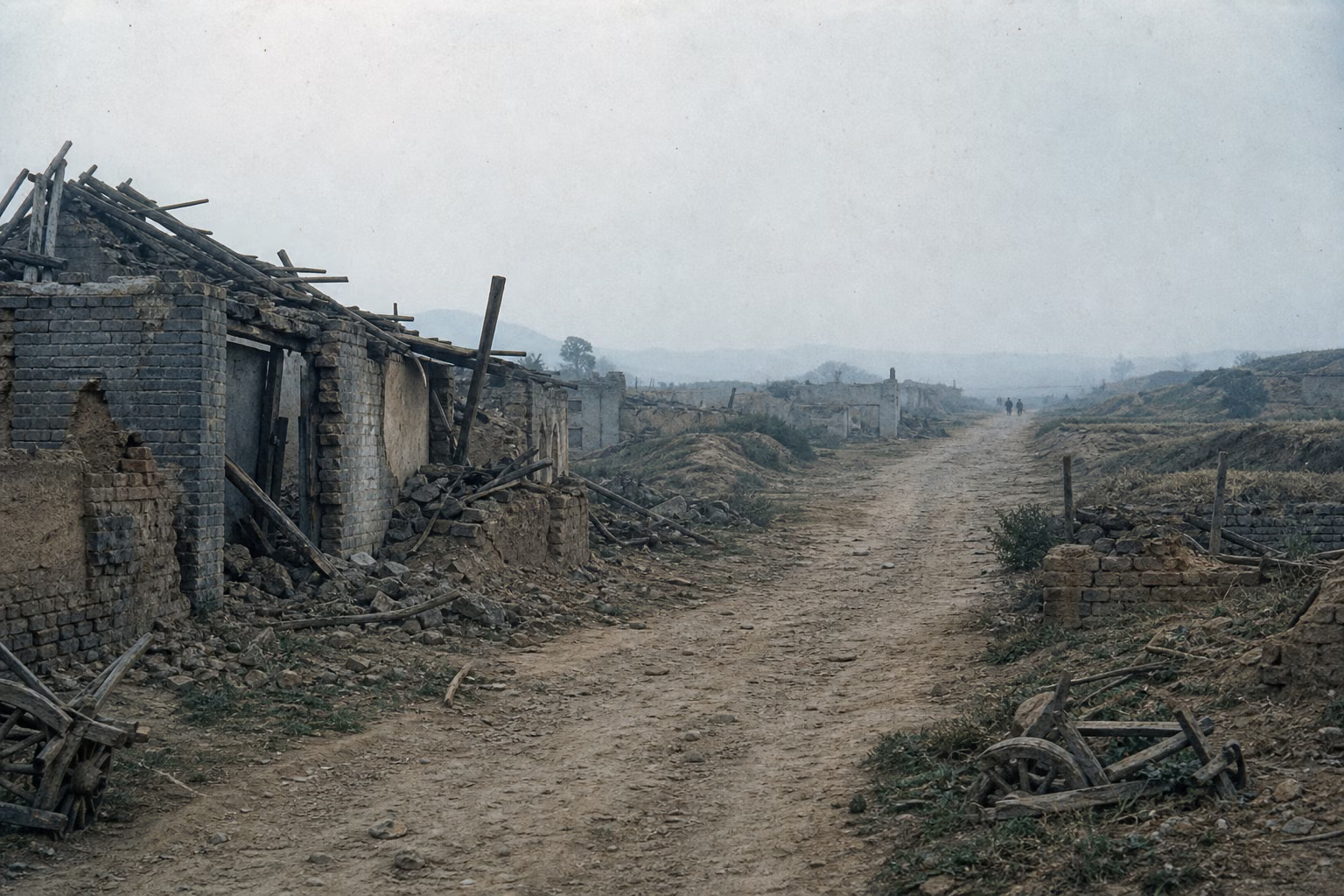
- Military: cumulative Nationalist Army losses exceeded 8 million (including uprising, surrender, and reorganization -- the debate over composition requires distinction, and so does the statistical use of the word "annihilated"); People's Liberation Army casualties were about 1.3 million (statistical bases unverified).
- Civilians ※: fighting, famine under siege (Siege of Changchun, 1948: several months of siege left tens of thousands to hundreds of thousands dead of hunger -- the most painful node where accounts across the Taiwan Strait diverge sharply, and the Siege of Changchun will not be avoided in the special section of the Liaoshen overview), forced conscription and grain requisition, the prehistory of counterrevolutionary suppression -- the civilian account of the civil war is included just as it is for wars against external enemies.
- Front support: 5.43 million civilian laborers in the Huaihai Campaign -- the two sides of the narrative that it was "pushed out by wheelbarrows" and of the exhaustion of the people's strength.
- Economy: the gold yuan plundered the urban middle class ※ (the social trauma of the 1948 currency reform).
Aftermath
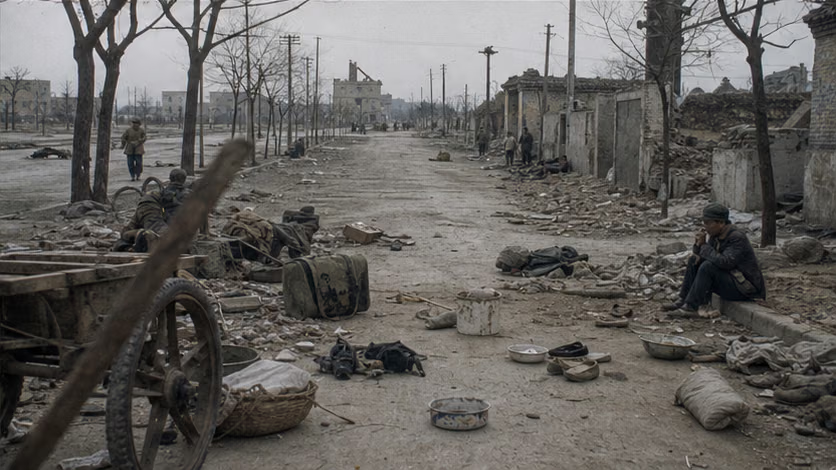
- The People's Republic of China was founded -- "the Chinese people have stood up" and the consolidation process of the new regime (suppression of counterrevolutionaries and completion of land reform -- closing outside the period covered by this series, noted only briefly).
- The National Government moved to Taiwan: 2 million soldiers and civilians crossed the sea -- the waishengren narrative and a new page in Taiwan history.
- Militarily not ended: Kinmen (1949.10) and confrontation across the Taiwan Strait -- "this war has no armistice agreement": the present Taiwan Strait situation is its extended line.
- The People's Liberation Army's wartime learning, formed here -- mobile warfare, annihilation battles, political work -- led directly into the War to Resist U.S. Aggression and Aid Korea.
How Each Side Records It
- Communist canonical narrative: "Liberation War / Third Domestic Revolutionary War" -- a theory of the people's choice (the direction of popular support as the decisive factor); the three great campaigns form the narrative peak.
- Taiwan side: "War of Pacification / KMT-CPC Civil War" -- a literature of failure analysis (military, economic, diplomatic, and party-affairs schools of explanation; a research boom in the era of Chiang Kai-shek's diaries); the last instance in which the name itself is the position, echoing the beginning with "Second Revolution / Gan-Ning Rebellion."
- Scholarship: the empirical turn in civil-war studies (under the current asymmetry in archival openness); the possibility of cross-checking empirical mainland studies by Jin Chongji, Yang Kuisong, Deng Ye, and others with Taiwan-side archives (the Daxi Archives) -- many of this article's open questions depend on this.
Disputes and Sensitivities
- Why the peace window closed -- the respective accounts of responsibility on both sides are placed side by side (the breakdown of the Political Consultative Conference resolutions, the Northeast ceasefire order, and the National Constituent Assembly as key nodes).
- The bases and presentation of the Siege of Changchun ※ -- one of the heaviest nodes among the civil-war atrocities covered in this series (bases placed side by side, with recorders present).
- The number war over Soviet aid and U.S. aid -- each side's archival bases placed side by side.
- The relative weight of "popular support determinism" and "military determinism" -- canonical and scholarly accounts placed side by side.
- For the wording of the present Taiwan Strait situation, see the position sentence in "Aftermath."
Contents
Zhangjiakou, Dingtao, Xiangfan, Hengbao and the southern line, Xichang and southern Yunnan, and Zhoushan are incorporated into the phases of this article and do not become separate articles.
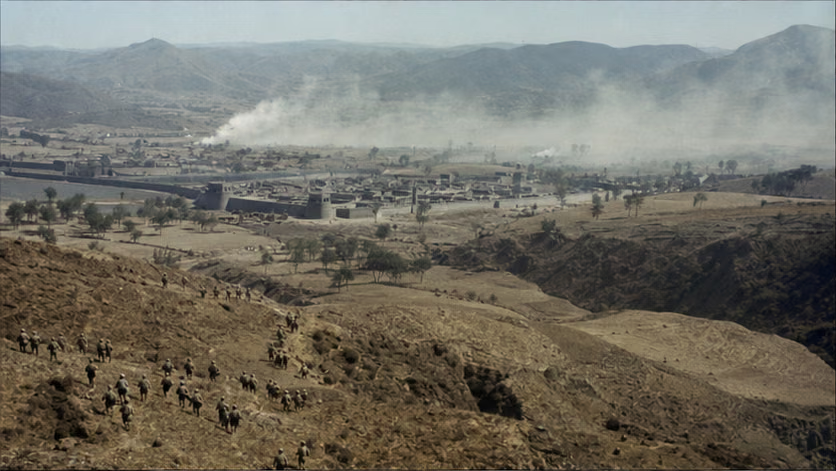 Battle of Shangdang1945.09Mao Zedong was at the Chongqing negotiating table; Liu Bocheng and Deng Xiaoping were on the Shangdang battlefield in Shanxi -- the first battle opened during the negotiations, where the 17,000 men Yan Xishan had sent into the heart of the liberated area, together with 20,000 reinforcements, were swallowed up.
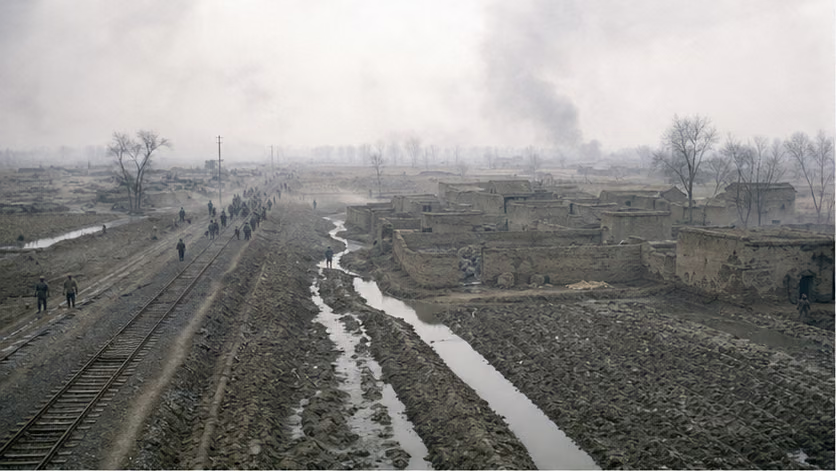 Battle of Handan1945.10Forty-five thousand Nationalist troops advanced north along the Pinghan line to "receive" territory, only to be stopped north of the Zhang River by sixty thousand troops of the Shanxi-Hebei-Shandong-Henan Military Region; by the seventh day of fighting, Gao Shuxun, commander of the New Eighth Army, brought more than ten thousand men over under fire, changing banners before the line--what the old warlord era had called "turning coat" would from then on be called "uprising."
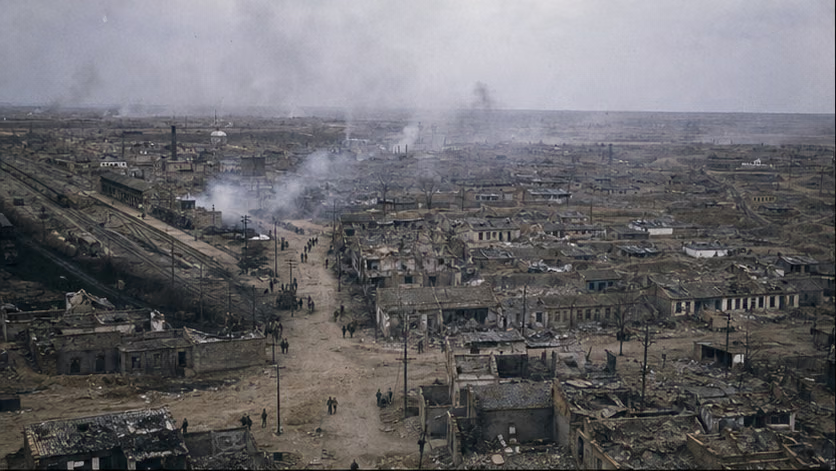 Defense of Siping1946.04Eighty thousand men held a market town on the plain, standing for one month against 10 fully U.S.-equipped divisions--victorious divisions that had come out of the Burmese jungle and surviving divisions that had endured the forests of the Northeast met head-on in Siping Street; once Tazishan fell, Lin Biao withdrew north to the Songhua River overnight.
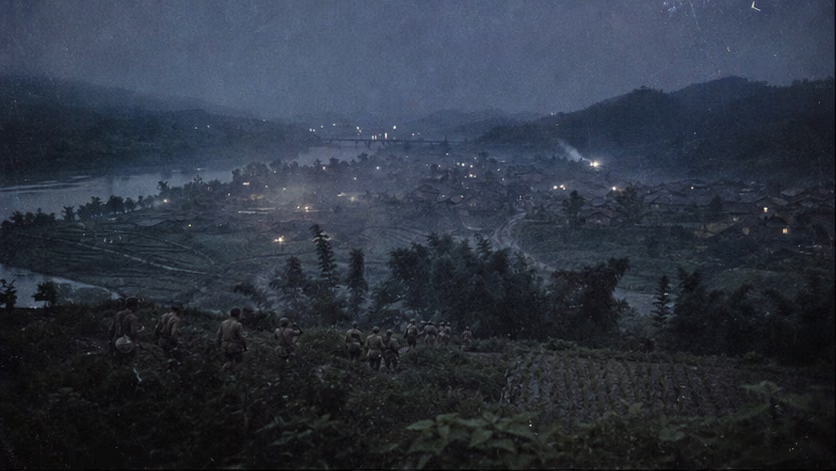 Breakout from the Central Plains1946.06Fifty thousand men were enclosed for a full year by three hundred thousand in the mountains within a hundred li of Xuanhuadian in eastern Hubei; on the night of June 26, 1946, they broke out in separate routes--and that shot is recorded in common histories as the first shot of full-scale civil war.
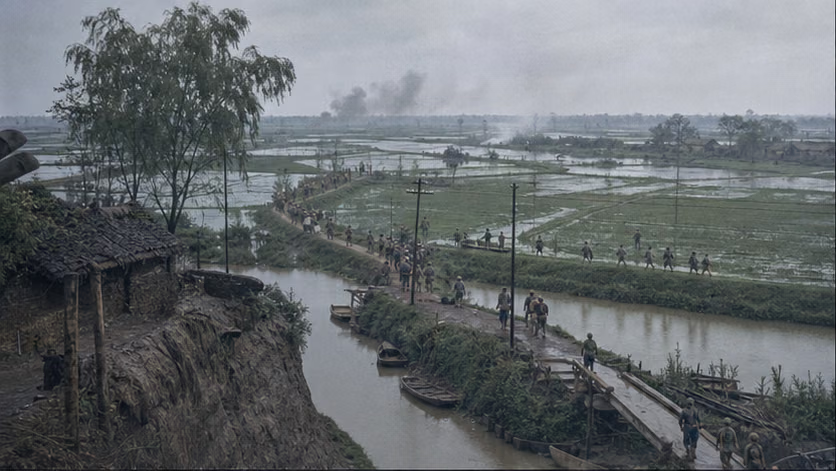 Seven Battles, Seven Victories in Central Jiangsu1946.07Thirty thousand against 120,000: in forty-five days of interior-line fighting in Central Jiangsu, Su Yu fought seven engagements and won every one. In the first quarter after full-scale civil war began, this was the Liberation Army's first concrete proof that "this war can be won."
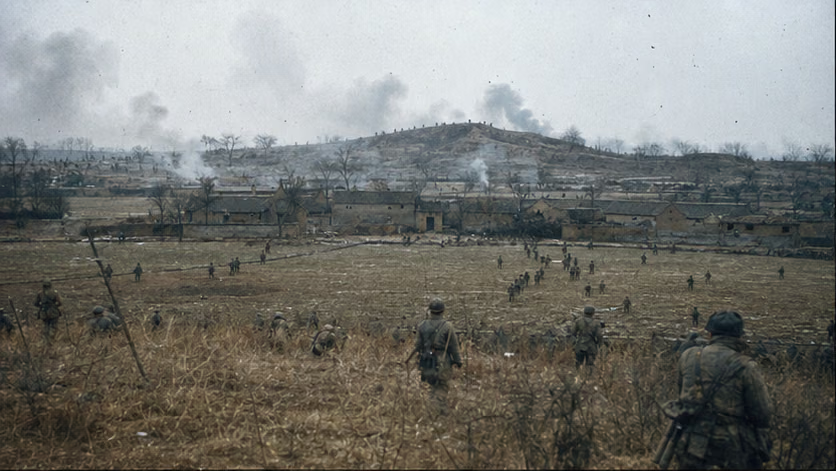 Battles of Northern Suqian and Southern Shandong (combined account)1946.12The first two battles after the Shandong and Central Jiangsu field armies joined forces: first the Reorganized 69th Division was annihilated, then the Reorganized 26th Division and the First Fast Column were taken in one sweep; for the first time, the People's Liberation Army destroyed an entire Nationalist American-equipped fast column, and from this came the artillery and tank foundation of the East China Field Army.
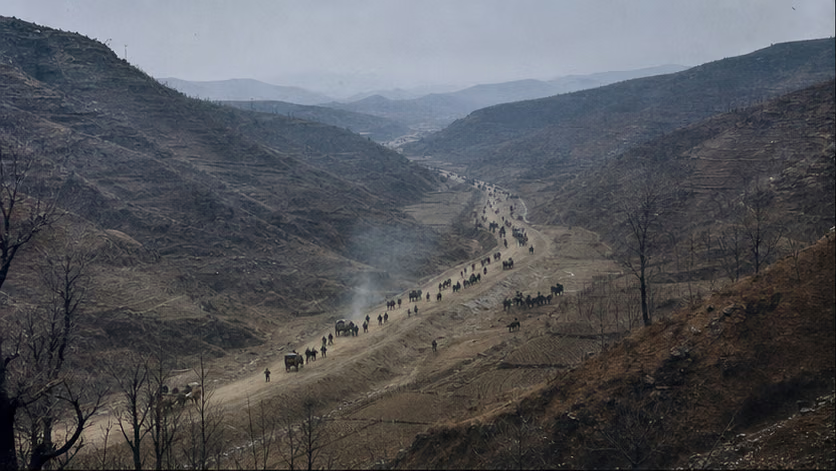 Battle of Laiwu1947.02The East China Field Army deliberately yielded the empty city of Linyi and secretly wheeled north; in three days, in the valleys around Laiwu, it swallowed Li Xianzhou's 56,000-man group--the winning move in this battle lay not in firepower, but in deception and an inside connection: Han Liancheng, commander of the Reorganized 46th Division in the opposing Second Pacification Area, was a secret collaborator of the CPC.
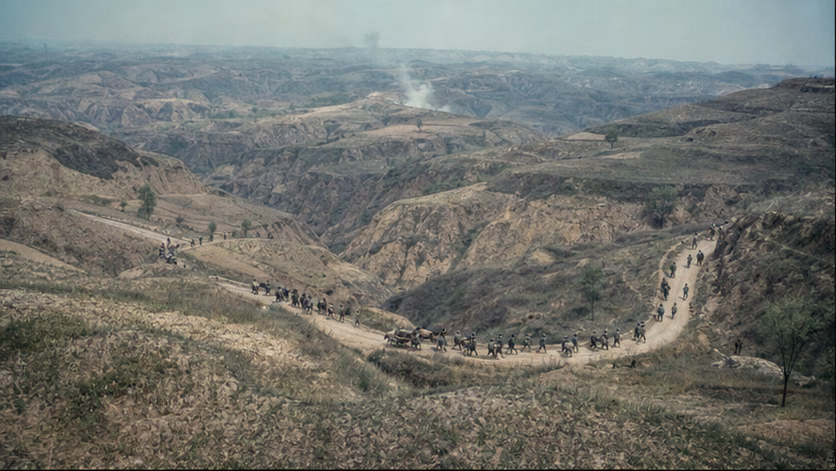 Mobile Warfare in Northern Shaanxi (Qinghuabian, Yangmahe, Panlong, Shajiadian — combined account)1947.03Hu Zongnan's 250,000 men entered Yan'an, but the city they attacked had been deliberately left empty; Peng Dehuai's 26,000 men used "mushroom tactics" on the Loess Plateau to bite four times in succession--Qinghuabian, Yangmahe, Panlong, and Shajiadian--and half a year later, the northwestern war situation had turned over.
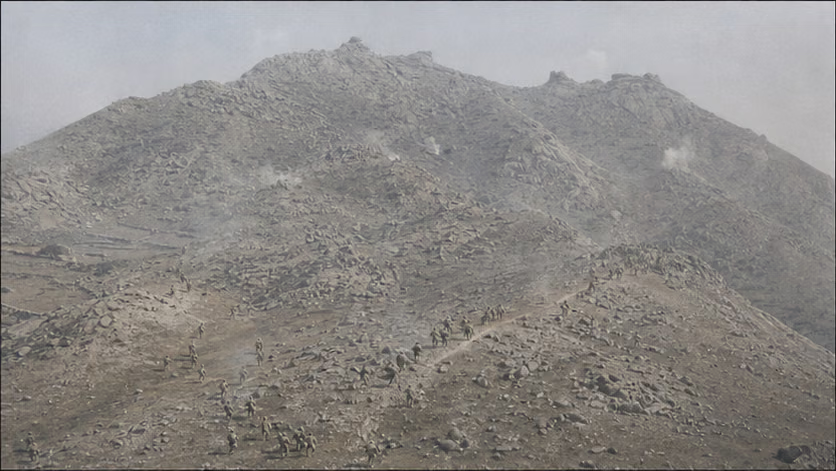 Battle of Menglianggu1947.05The foremost of the Nationalist Army's five elite main forces, the Reorganized 74th Division, advanced rashly into the Yimeng Mountains, and Su Yu, from the front of the battle line, set out to "take a senior general's head from amid a million troops": in five days, the division's 32,000 men, together with division commander Zhang Lingfu, were annihilated at Menglianggu. The spearhead of the focused offensive was snapped off on the spot; the "iron army of resistance against Japan" from Shanggao eight years earlier died on a hilltop in civil war.
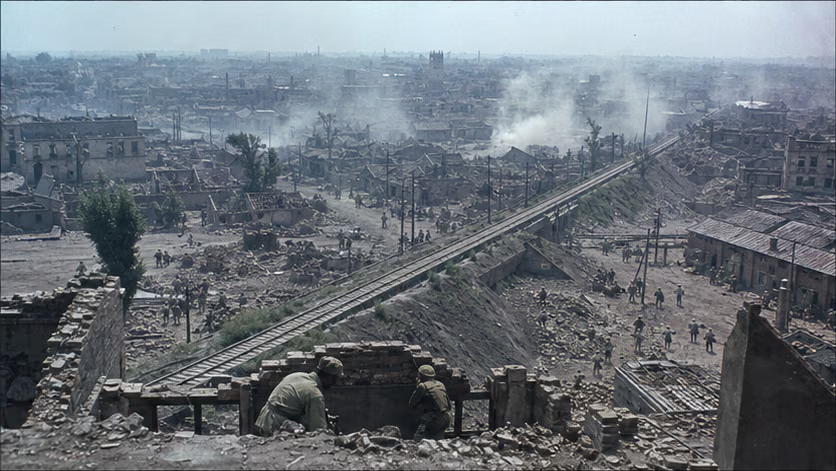 Assault on Siping (1947)1947.06The troops that had defended Siping for a month one year earlier came back to assault the same city: half a month of street fighting, more than 10,000 casualties, and finally a withdrawal before Nationalist reinforcements could close the encirclement. The same city was fought over four times; this time taught the Northeast Democratic United Army one thing: winning in the field did not mean knowing how to take a city. The assault lessons used one year later at Jinzhou and Tianjin were paid for at Siping.
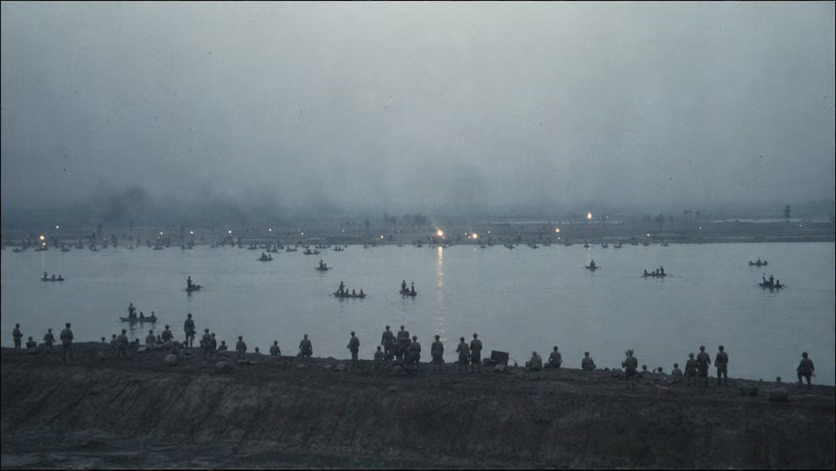 Southwest Shandong and the Advance into the Dabie Mountains1947.06In the summer of 1947, Liu and Deng's 120,000-man army crossed the Yellow River by night, destroyed nine and a half Nationalist brigades in Southwest Shandong within a month, then threw away its heavy equipment, dispensed with a rear area, and inserted itself a thousand li into the Dabie Mountains--the strategic offensive of the Chinese Civil War began with the almost "self-wounding" wedge of a main force.
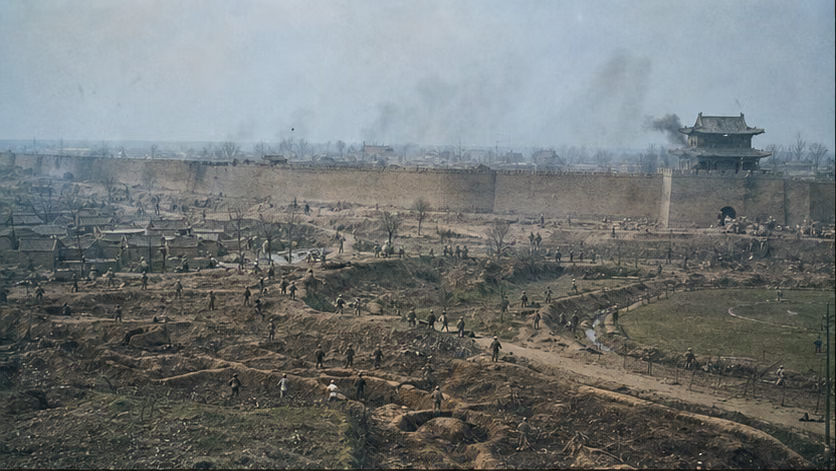 Assault on Linfen1948.03In the spring of 1948, Xu Xiangqian led more than 50,000 troops newly upgraded from local forces, without heavy artillery, and by digging approach trenches and packing explosives into tunnels, blew open Linfen, the "Crouching Ox City," from beneath the ground in seventy-two days--the People's Liberation Army's "degree thesis" in assaulting fortified positions.
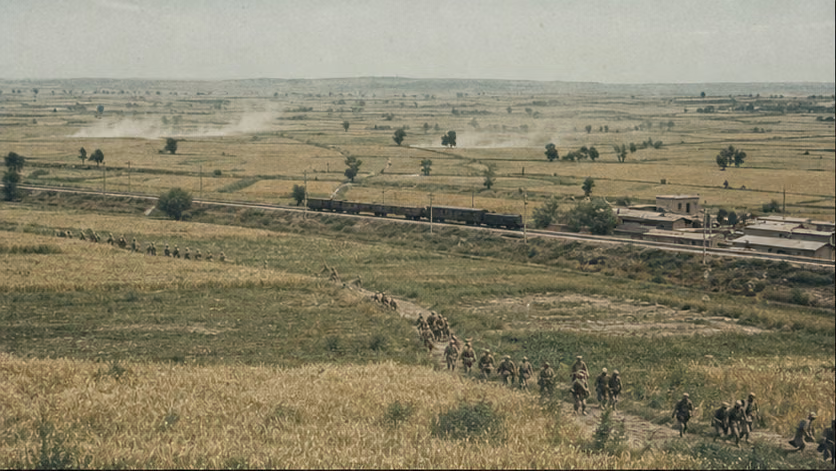 Battle of Jinzhong1948.06Barely a month after Linfen had fallen, Xu Xiangqian's 60,000 men moved north onto the Jinzhong Plain and, in forty days, consumed roughly 100,000 of Yan Xishan's troops--among them Japanese-nationality units retained as organized formations after Japan's surrender, whose front-line commander Motomiya Kaoru was killed--and from then on Yan's army withdrew into the isolated city of Taiyuan.
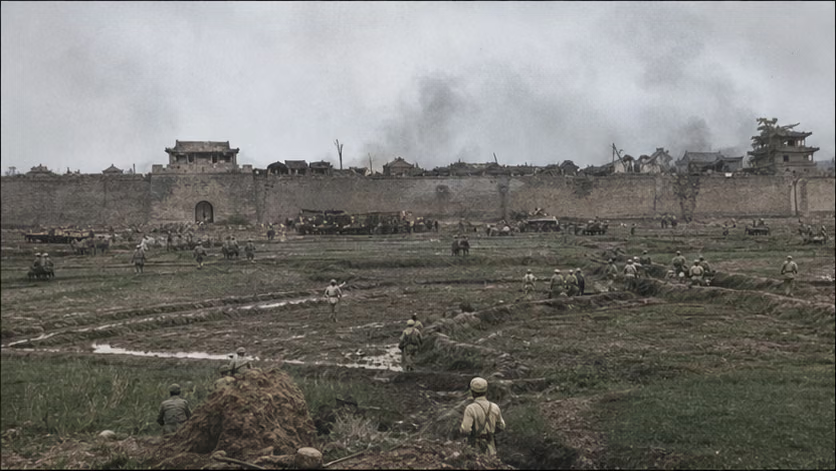 Battle of Yudong1948.06In the summer of 1948, over twenty days in the Central Plains, Su Yu first took Kaifeng, then destroyed the Ou Shounian Corps, and finally held against Huang Baitao before withdrawing from the field--with more than 90,000 enemy troops destroyed or captured and over 30,000 casualties of his own, he verified that "large annihilation battles could be fought in the Central Plains," and rehearsed the Huaihai Campaign half a year ahead of time.
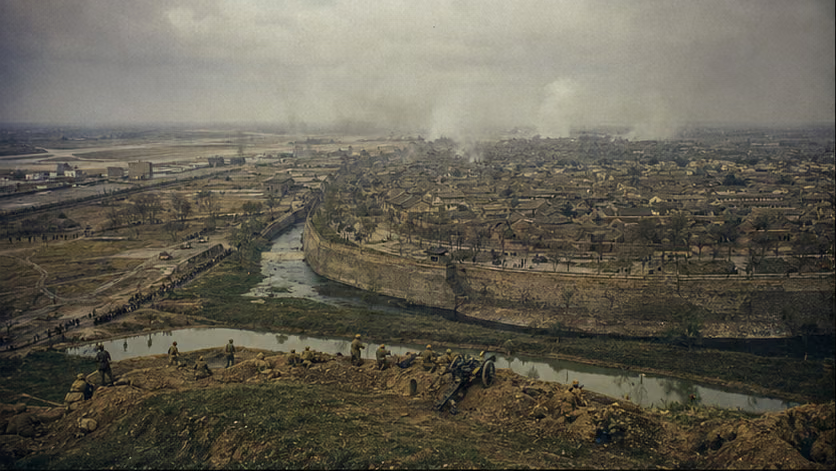 Battle of Jinan (1948)1948.09In eight days, a fortified provincial capital defended by 100,000 men fell; Du Yuming's 170,000 relief troops still had not dared to move, and the city had already changed hands--the "attack Jinan and strike the relief force" plan received no relief force to strike, but the assault on fortified positions revealed its full measure. From the day Jinan was taken, no heavy Nationalist army group ever again held a major city; the gate to the decisive battles was pushed open at Jinan.
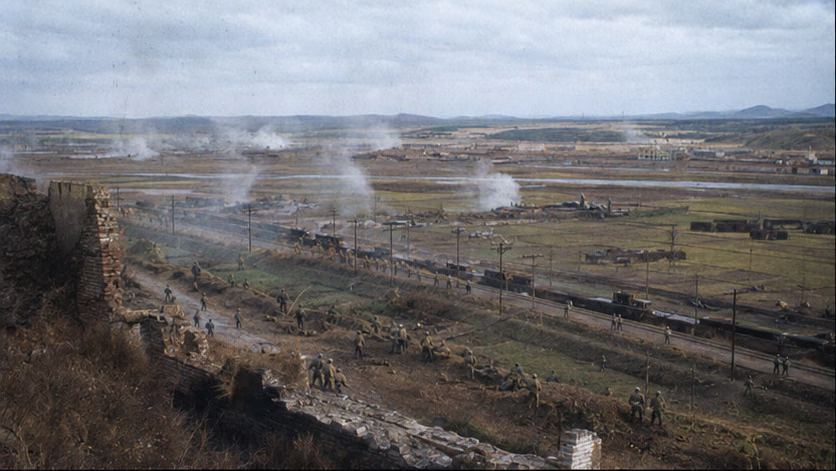 Liaoshen Campaign (1948)1948.09In fifty-two days, all of the Northeast changed hands, and 472,000 elite Nationalist troops vanished -- from this point onward, the balance of forces tipped in favor of the People's Liberation Army. The keys to this decisive campaign were one city (Jinzhou), one ridge (Tashan), and one city that had been starving for five months (Changchun): the brilliance of victory and the starved dead of a besieged city both belong to these fifty-two days.
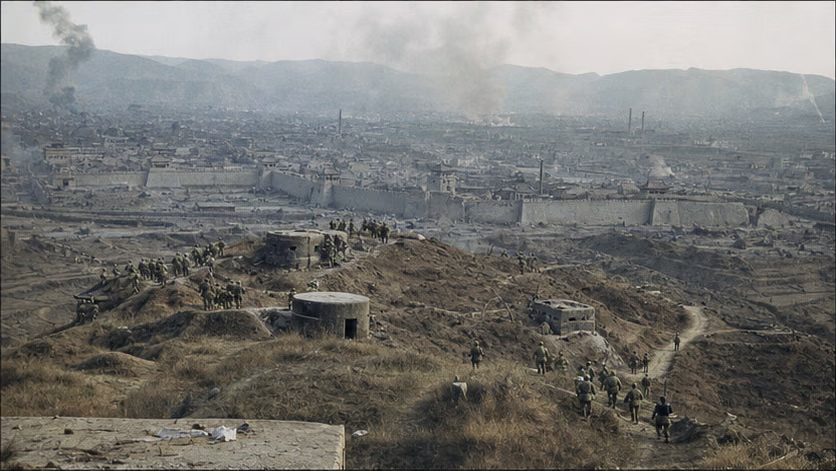 Battle of Taiyuan (1948–49)1948.10.05Yan Xishan spent thirty-eight years turning Taiyuan into a city of pillboxes; the People's Liberation Army spent six months and twenty days, and paid 45,000 casualties, to take it--the longest siege of the Chinese Civil War, its costliest assault on fortified positions, and the end point of "pillboxism."
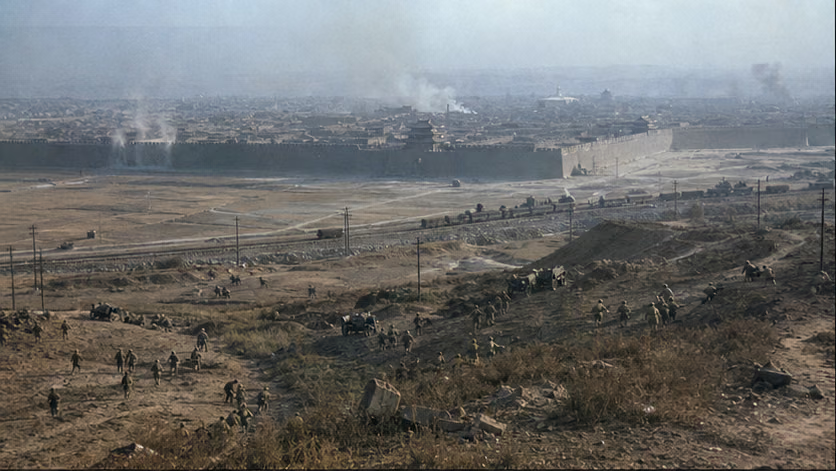 Assault on Jinzhou1948.10.09Two years earlier, at Siping, the Northeast Field Army had paid its bitterest tuition; this time, in 31 hours, it smashed open Jinzhou -- the graduation examination for Siping's tuition.
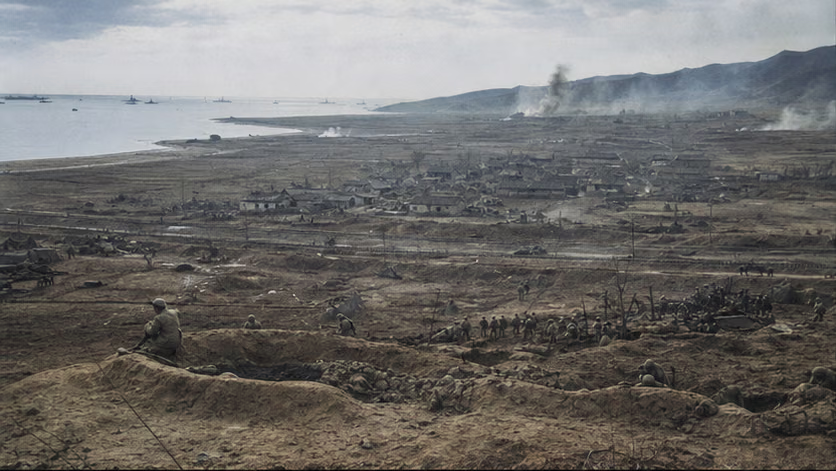 Battle of Tashan1948.10.10Tashan had no mountain, only an 8-kilometer stretch of flat ground -- here, eight divisions of the Northeast Field Army held off 11 divisions for six days and nights, without yielding an inch of the position; without Tashan, there would have been no Jinzhou.
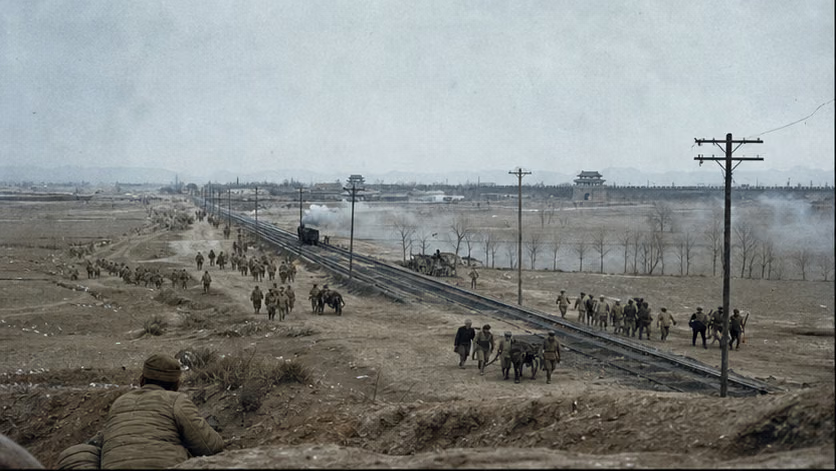 Pingjin Campaign (1948–49)1948.11North China's 520,000 troops were settled in sixty-four days, with only two real fights: Xinbao'an and the twenty-nine-hour assault on Tianjin; Beiping's 600,000 defenders and an eight-hundred-year-old ancient capital were brought over through "surrounding without attacking, separating without encircling." Force established the terms, negotiation took the city: on the day Fu Zuoyi signed, a new proper name entered the history of urban attack and defense in China -- the "Beiping Method."
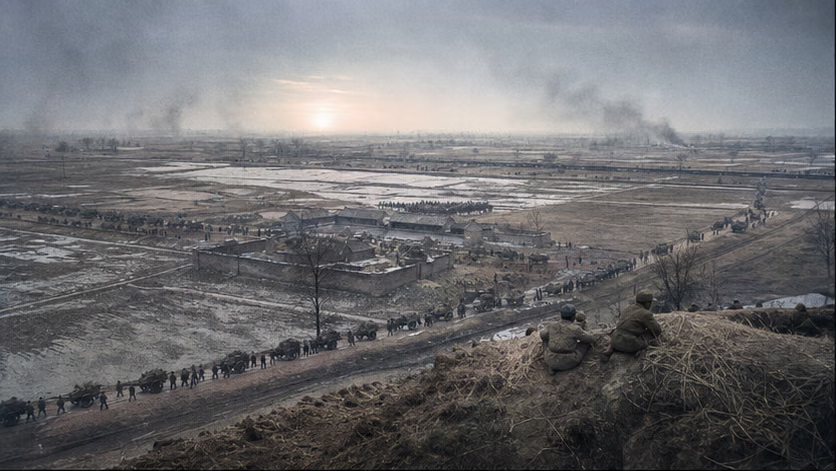 Huaihai Campaign (1948–49)1948.11Sixty-six days, 600,000 against 800,000, 555,000 destroyed or incorporated -- the greatest corps-level decisive campaign in world military history in which the smaller force defeated the larger. Its other side was just as unprecedented: the wheelbarrows of 5.43 million civilian laborers. On the Xu-Beng Plain, two wars were in fact being fought: one between army and army, and one between a mobilization system and a supply system -- the second one decided the outcome first.
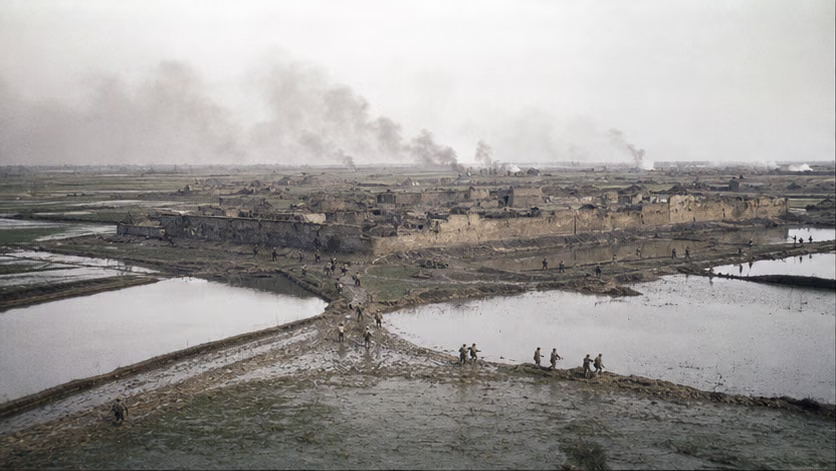 Battle of Nianzhuang1948.11.06Huang Baitao's Seventh Corps, 120,000 men, was ground down for twelve days among the walled villages and fortified hamlets of Nianzhuangwei, ground down to the last man: Huang Baitao, who had "made amends through merit" at Menglianggu, died at Nianzhuang.
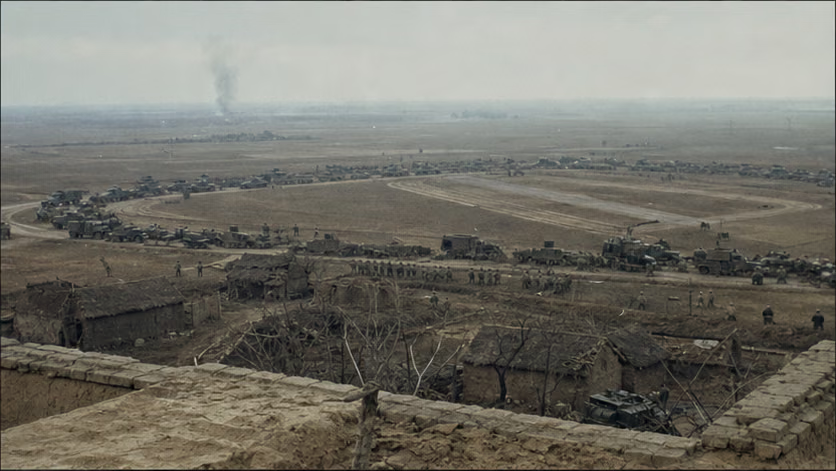 Battle of Shuangduiji1948.11.23The field army with the worst equipment used thousands of meters of trenches dug in one night to seal the best-equipped corps at Shuangduiji -- trenches against tanks. And the core of Huang Wei's Twelfth Corps, the 18th Army, was descended from the Eleventh Division that had been broken by the Red Army at Caotaigang fourteen years earlier -- the same force, two eras, two destructions.
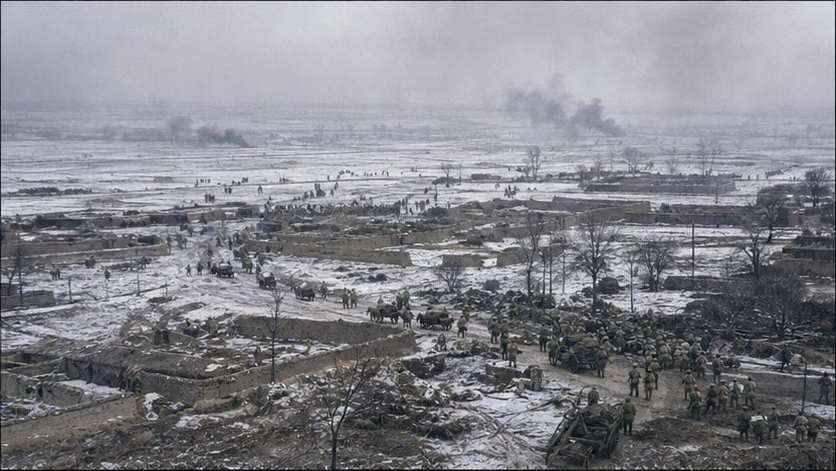 Battle of Chenguanzhuang1948.12.04Three hundred thousand Nationalist troops abandoned Xuzhou and withdrew west; within five days they were encircled in a stretch of open plain villages northeast of Yongcheng, held there for twenty days without attack, and then finished in four days -- Du Yuming was captured, Qiu Qingquan was killed, and Sun Yuanliang and Li Mi escaped alone in succession. This was not a typical offensive-defensive battle: its main body was an open-air encirclement ground for 300,000 people, where fighting, hunger, and psychological warfare together broke this army apart. It was also the last shot of Huaihai.
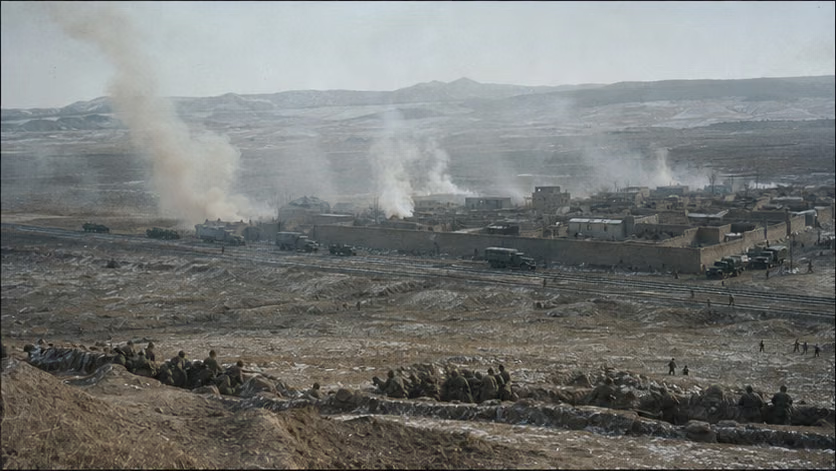 Battle of Xinbao'an1948.12.22More than 10,000 men of Fu Zuoyi's founding elite, the 35th Army, were intercepted on their way back to relieve Beiping and pinned inside a town no larger than a tack; those surrounding them endured 14 days without attacking. It took only 1 day to destroy them, but the 14 days of "not attacking" before that day were the live hinge of the entire Pingjin situation.
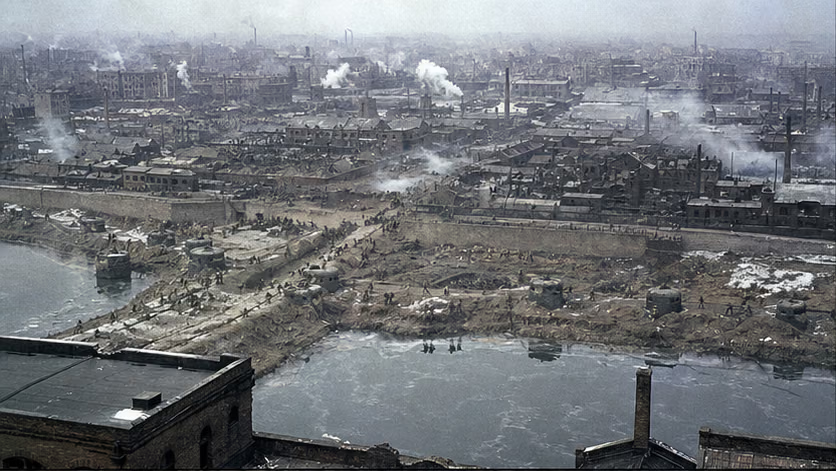 Assault on Tianjin1949.01Defenses encircling the city, built up for months by 130,000 men, were broken through in 29 hours - the real addressee of this battle was not Tianjin but Beiping; the speed at Tianjin became weight at the negotiating table.
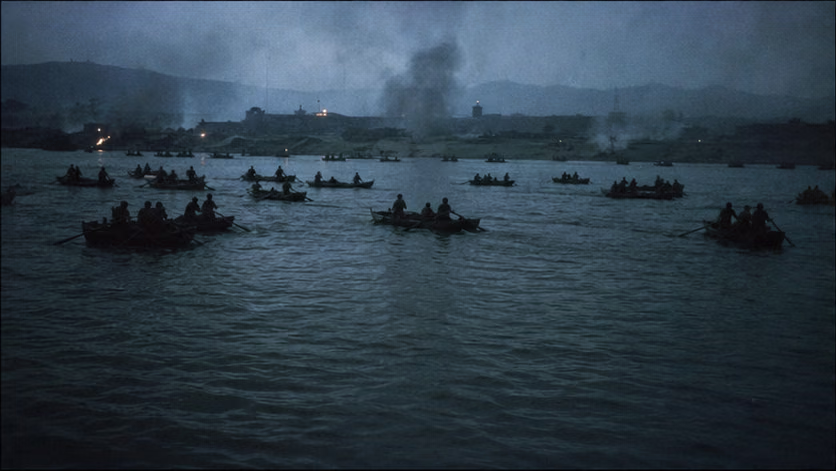 Yangtze Crossing Campaign (incl. the Amethyst Incident)1949.04On the night the peace talks broke down, a million troops launched from a thousand-li river front at once -- the river defense was broken in three days, Nanjing was entered on the twenty-third, and the calendar in the Presidential Palace stopped in April. The uprising before the lines at Jiangyin Fortress opened the eastern sector; a British warship that had intruded into the war zone was hit by artillery: from Humen to the Amethyst, one hundred and nine years had passed, and the direction of the gun muzzles had finally changed.
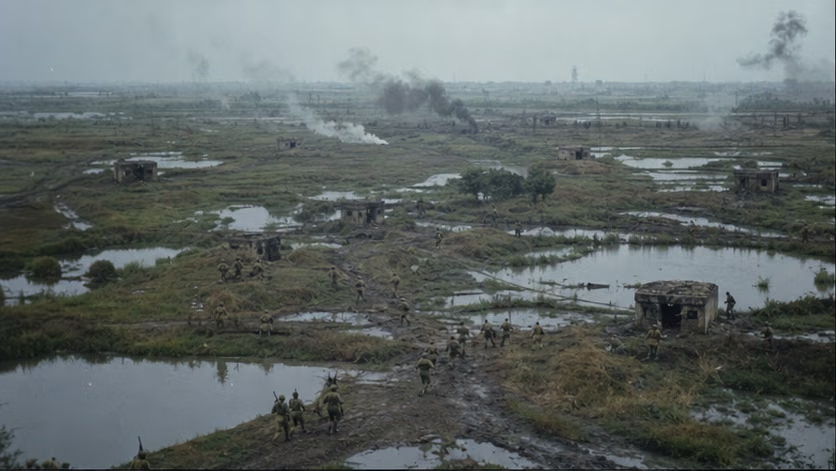 Battle of Shanghai (1949)1949.05On the outskirts, soldiers were made to spend their lives biting through blockhouses; inside the city, heavy artillery was forbidden--the costliest order of the sixteen-day battle was "catching rats in a china shop." To receive the foremost metropolis of the Far East intact, the People's Liberation Army shed many times more blood before the concrete bunker belts at Yuepu; at dawn on May 27, residents opened their doors and saw the roads filled with soldiers sleeping outside rather than entering private homes.
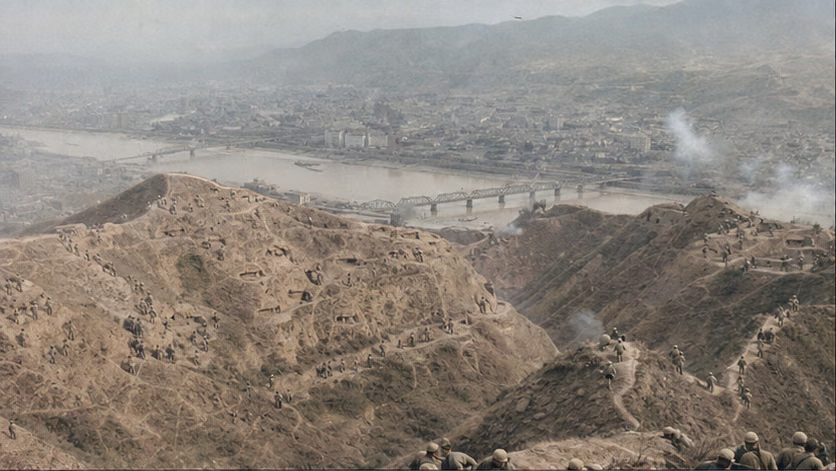 Battle of Lanzhou1949.08The Ma-family Army placed its last capital on Lanzhou's Southern Mountains: the First Field Army's first day's assault was checked, Peng Dehuai stopped to examine the terrain for three days, and when he attacked again, one day of bloody fighting took Shenjialing and seized the Yellow River Iron Bridge. The Northwest's toughest opponent was destroyed on the decisive ground of its own choosing. The old account from the Hexi Corridor twelve years earlier (the Western Route Army) turned a page here in another form--what remained was causality, not revenge.
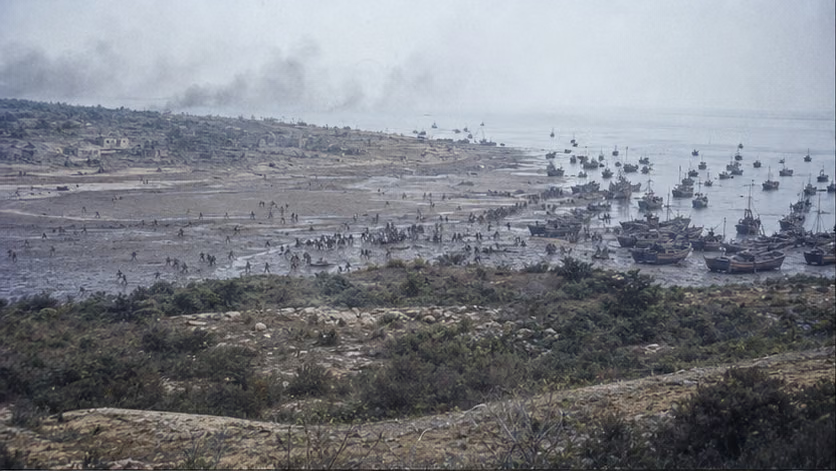 Battle of Kinmen (Guningtou, incl. Dengbu Island)1949.10Xiamen had just fallen when 9,000 men crossed by wooden boat to Kinmen at night. The tide went out, the boats grounded on the beach and were burned to nothing, and the troops ashore fought for 3 days without a single boat of reinforcement before being annihilated: the most complete defeat of the Chinese Civil War. 8 months later the Korean War broke out, the Seventh Fleet entered the Taiwan Strait, and the window for an amphibious crossing closed permanently. Half of the Taiwan Strait's present shape was fixed on the beaches of Guningtou.
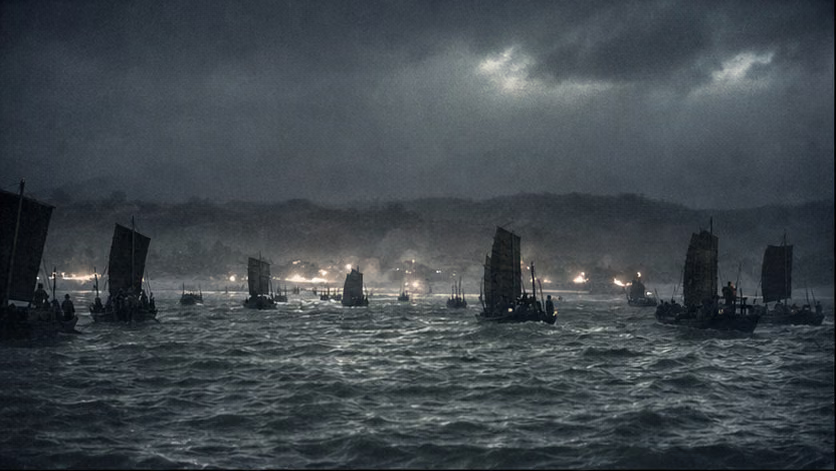 Hainan Island Campaign1950.03Half a year after Kinmen was lost, the Fourth Field Army crossed the thirty-nautical-mile Qiongzhou Strait in wooden sailing vessels and turned the situation around--by relying on two things Kinmen had lacked: 8,000 reception troops who had first slipped onto the island, and the Qiongya Column, which had fought guerrilla war there for twenty-three years. The whole island was liberated in early May; fifty days later, the Korean War began--the window history left for a sea crossing was only this wide.
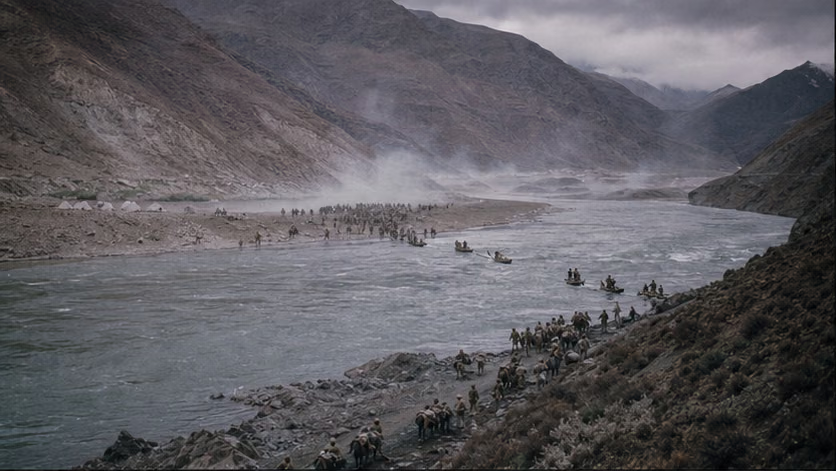 Battle of Chamdo1950.10A nineteen-day campaign beside the Jinsha River, fought in order to make negotiation happen: after the main Tibetan force was destroyed, all prisoners were released and given travel money; Ngapoi Ngawang Jigme, the Chamdo governor-general, turned to become chief representative in the peace talks, and seven months later the Seventeen-Point Agreement was signed. This was the last engagement on Whence We Came's 113-year timeline: in the form of "fight for talks, release after the fight," it gave the war genealogy of the whole series a different kind of ending.
Sources and Open Questions
Sources: *History of the People's Liberation Army in the National Liberation War* (Academy of Military Science, five volumes); *Chiang Kai-shek and the KMT-CPC War and Peace* (Jin Chongji); studies by Yang Kuisong, Deng Ye, and others; Taiwan-side *War History of the Pacification Campaign*; *Report on the Marshall Mission to China*; Daxi Archives (online, Academia Historica).
Open questions: each statistical basis for troop strengths and losses on both sides; composition of uprising and reorganization; bases for the Siege of Changchun; figures for U.S. and Soviet aid; gold-yuan figures; statistical bases for total enemy losses inflicted in the three great campaigns; source of the phrase "resolving the Communist forces in three to six months"; statistical bases for the troops and cadres that went beyond the Pass ahead of time; decision telegrams and documents from Yan'an in the summer of 1946; the source and context of the phrase "If people are preserved while land is lost, both people and land will be preserved."
All images on this site are AI-generated depictions. They are not historical photographs, not primary sources, and do not depict any real individual.